


Artificial intelligence has fundamentally reshaped how marketers plan, execute, and optimize their campaigns. From automating repetitive tasks to delivering hyper-personalized customer experiences, AI tools for marketing have become essential for businesses that want to stay competitive in an increasingly data-driven landscape. Whether you are a small business owner just starting your digital journey or a seasoned marketing director managing complex multi-channel campaigns, understanding which AI-powered solutions to leverage—and how to use them effectively—can make the difference between stagnation and exponential growth. This guide dives deep into the best AI marketing tools available today, how they fit into different skill levels, and practical strategies for getting the most out of them.

What Are AI Tools for Marketing and Why They Matter
AI marketing tools are software applications that use artificial intelligence technologies such as machine learning, natural language processing, and predictive analytics to automate, enhance, and optimize marketing activities. Unlike traditional marketing platforms that rely on static rules and manual input, AI-powered tools learn from data patterns, adapt in real time, and deliver actionable insights that humans simply cannot process at scale.
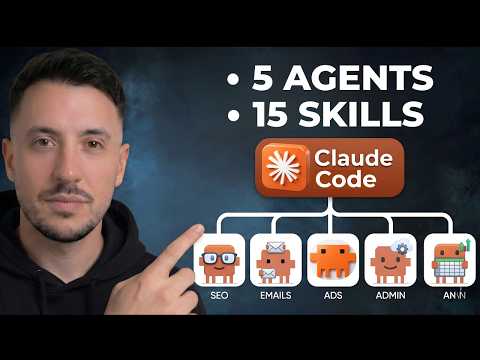
The importance of these tools cannot be overstated. Modern consumers expect relevant, timely, and personalized interactions with brands. AI enables marketers to deliver exactly that—at every touchpoint along the customer journey. Whether you are segmenting audiences, generating content, managing ad spend, or analyzing campaign performance, AI tools for marketing streamline workflows and unlock levels of efficiency that were unimaginable just a few years ago.
Key benefits of using AI in marketing include:
- Automated content creation and optimization
- Real-time data analysis and reporting
- Improved audience targeting and personalization
- Cost savings through smarter budget allocation
- Faster decision-making with predictive insights
- Scalable customer engagement across channels
Top AI Tools for Marketing in 2025
The market is saturated with AI marketing platforms, but not all of them deliver equal value. Below is a curated list of some of the most powerful and widely used tools, organized by marketing function.
Content Creation and Copywriting
- Jasper AI — A leading AI writing assistant that generates blog posts, ad copy, emails, and social media content using natural language generation models.
- Copy.ai — Designed for short-form marketing copy, including headlines, product descriptions, and call-to-action lines.
- Surfer SEO — Combines content optimization with AI-driven keyword research and SERP analysis to help you rank higher organically.
Advertising and Campaign Management
- Google Ads Smart Bidding — Uses machine learning to automatically optimize bids for conversions or conversion value across search, display, and video campaigns.
- Albert AI — An autonomous digital marketing platform that handles media buying, audience targeting, and cross-channel campaign optimization with minimal human intervention.
Email Marketing and Automation
- Phrasee — Uses AI to generate and optimize email subject lines and push notification copy that drives higher open and click-through rates.
- Mailchimp with AI Features — Incorporates predictive analytics for send-time optimization, audience segmentation, and content recommendations.
Social Media and Customer Engagement
- Sprout Social AI — Leverages AI for sentiment analysis, social listening, and automated response suggestions across social platforms.
- ManyChat — Powers AI-driven chatbot marketing on Facebook Messenger, Instagram, and WhatsApp for lead generation and customer support.
Comparison: Best AI Tools by Use Case
Choosing the right tool depends on your specific needs, budget, and marketing maturity. The table below compares top platforms across key criteria:
| Tool | Primary Function | Pricing Range | Best For |
| Jasper AI | Long-form content creation | $49–$125/month | Blog writing, ad copy teams |
| Copy.ai | Short-form copy generation | $49–$249/month | Quick social posts, email drafts |
| Surfer SEO | Content optimization & SEO | $89–$199/month | Organic search growth |
| Albert AI | Autonomous ad management | Custom enterprise pricing | Large-scale paid media |
| Phrasee | Email & notification optimization | Custom pricing | Email marketers, e-commerce |
| ManyChat | Chatbot marketing automation | $15–$199/month | Conversational commerce |
How to Choose the Right AI Marketing Tool for Your Business
Not every AI tool will be a fit for every business. The decision should be guided by your goals, team size, budget, and technical expertise. Here is a breakdown organized by experience level.
Beginner Level: Start with the Basics
If you are new to AI in marketing, start with tools that have intuitive interfaces and require minimal setup. Copy.ai and Jasper are excellent entry points for content creation. Mailchimp with its built-in AI features is ideal for email marketing beginners. Focus on one or two tools that address your biggest pain point—whether that is content production, audience targeting, or email engagement. Do not try to adopt everything at once; the learning curve can become overwhelming.
Tips for beginners:
- Identify your single biggest marketing bottleneck
- Choose an AI tool with a free trial or low-cost entry plan
- Spend at least two weeks learning the tool before judging its effectiveness
- Set measurable goals (e.g., 20% increase in email open rates)
Intermediate Level: Layer in Automation and Analytics
Once you are comfortable with basic AI tools, it is time to integrate platforms that provide deeper automation and analytics. Surfer SEO is a great intermediate step for content teams looking to improve organic visibility. Phrasee can elevate your email marketing strategy beyond manual A/B testing. At this stage, you should also explore AI-powered analytics platforms like HubSpot (which now includes robust AI features) to unify your data and gain cross-channel insights.
Tips for intermediate users:
- Integrate your AI tools with your CRM for seamless data flow
- Use AI-generated insights to refine audience personas
- Experiment with AI-driven A/B testing for subject lines, landing pages, and ad creatives
- Start building internal playbooks documenting what works and what does not
Advanced Level: Go Autonomous and Predictive
Advanced marketers should explore fully autonomous platforms like Albert AI and Persado (which uses AI to generate emotionally optimized messaging). At this level, the focus shifts from individual tasks to orchestrating entire marketing ecosystems. You will want to integrate multiple AI tools through APIs, build custom dashboards, and leverage predictive modeling to anticipate customer behavior before it happens.
Tips for advanced users:
- Invest in training your team on AI prompt engineering and tool configuration
- Use AI to build predictive customer lifetime value models
- Continuously refine AI models with proprietary first-party data
- Monitor for AI bias and ensure ethical marketing practices
Practical Tips for Integrating AI Tools Into Your Marketing Strategy
Adopting AI tools is not just about signing up for a platform—it is about weaving artificial intelligence into your overall marketing strategy in a thoughtful and intentional way. Here are expert recommendations that go beyond the basics.

1. Start with your data foundation. AI tools are only as good as the data they consume. Before implementing any AI marketing solution, audit your data quality. Ensure your customer databases are clean, your tracking pixels are firing correctly, and your analytics platforms are capturing the metrics that matter most to your business.
2. Combine AI with human creativity. The best marketing results come from a partnership between human intuition and machine intelligence. Use AI to handle data-heavy tasks like audience segmentation, trend identification, and performance reporting, while reserving creative strategy, brand voice development, and relationship building for your human team members.
3. Measure ROI rigorously. Every AI tool you adopt should have clear success metrics. Track cost-per-acquisition, engagement rates, content performance, and time saved. If a tool is not delivering measurable value within 90 days, reconsider whether it is the right fit or whether you are using it to its full potential.
4. Stay current with updates. AI marketing tools evolve rapidly. Platforms like Jasper, Copy.ai, and Surfer SEO regularly release new features and model improvements. Subscribe to their blogs, join their communities, and allocate time each month to explore new capabilities that could enhance your workflow.
5. Prioritize data privacy and compliance. As you integrate AI tools into your marketing stack, ensure they comply with regulations like GDPR, CCPA, and other regional data protection laws. Be transparent with your audience about how their data is being used, and choose AI vendors that prioritize security and ethical data handling.
The Future of AI in Marketing
The trajectory of AI in marketing points toward deeper personalization, greater automation, and more sophisticated predictive capabilities. Generative AI is already transforming content creation at scale, but the next wave will bring multimodal AI that can generate text, images, video, and interactive experiences simultaneously. Conversational AI is evolving into increasingly human-like chatbots that can handle complex customer service interactions and upselling conversations autonomously. Marketers who invest in building AI literacy now will be best positioned to capitalize on these emerging capabilities in the years ahead.
Frequently Asked Questions (FAQs)
What are the best AI tools for small business marketing?
For small businesses, Jasper AI, Copy.ai, and ManyChat are among the most accessible and affordable options. They offer user-friendly interfaces, free trials, and pricing plans designed for smaller budgets. Start with one tool that addresses your primary need—content, email, or chat—and expand as you see results.
Can AI tools replace human marketers?
No. AI tools are powerful amplifiers of human capability, but they cannot replace the strategic thinking, emotional intelligence, and creative nuance that experienced marketers bring. The most successful marketing teams use AI to handle repetitive, data-intensive tasks while focusing their human talent on creative strategy, relationship building, and brand storytelling.
How do AI marketing tools improve ROI?
AI tools improve ROI by optimizing ad spend through intelligent bidding, increasing conversion rates with personalized content, reducing manual labor through automation, and identifying high-performing channels and audiences faster than traditional methods. The key is to set clear goals and measure impact consistently.
Which AI tool is best for content marketing and SEO?
Surfer SEO combined with Jasper AI forms one of the most effective content marketing stacks. Jasper handles the writing and ideation while Surfer optimizes the content for search engine ranking based on real-time SERP analysis and keyword data.
Are AI marketing tools difficult to learn?
Most modern AI marketing tools are designed with ease of use in mind. Platforms like Copy.ai, Mailchimp, and ManyChat offer guided onboarding, templates, and customer support that make them accessible to beginners. The learning curve depends more on your specific use case than on the tool itself.
Conclusion
The landscape of AI tools for marketing is vast, rapidly evolving, and full of opportunity. From content creation and email optimization to autonomous ad management and predictive analytics, AI empowers marketers to work smarter, not harder. The key is to start strategically—choose tools that align with your goals, invest in understanding how they work, and continuously measure their impact on your bottom line. Whether you are a beginner taking your first steps with AI or an advanced marketer building an autonomous marketing engine, the tools are here, and the time to leverage them is now.