A business slogan is far more than a catchy phrase slapped onto a logo — it is the verbal heartbeat of your entire brand. Whether you are a startup founder refining your first pitch deck or a seasoned marketing director refreshing a legacy brand, understanding how to craft a memorable business slogan can mean the difference between blending in and standing out in a crowded marketplace. In this comprehensive guide, we will explore what makes a business slogan effective, walk you through proven creation frameworks, analyze iconic examples, and provide expert-level strategies you can apply immediately to elevate your brand communication.
What Is a Business Slogan and Why Does It Matter?
A business slogan — sometimes called a tagline or marketing motto — is a short, memorable phrase that encapsulates your brand promise, core values, or unique selling proposition. It lives alongside your logo, tagline architecture, and visual identity system, reinforcing what your company stands for every single time a customer encounters it. In the world of brand strategy, a well-constructed business slogan functions as a shorthand communication tool that cuts through advertising noise and lodges itself in consumer memory.
The importance of a business slogan extends beyond aesthetics. Research in consumer psychology consistently shows that slogan recall directly correlates with brand recognition and purchase intent. When a potential customer hears or reads your phrase in passing — on a billboard, a social media ad, or even a colleague’s conversation — it triggers an associative chain linking back to your products, services, and reputation. That emotional shortcut is incredibly powerful, especially in competitive industries where differentiation is hard-won.
The Role of a Slogan in Brand Identity
Your brand identity is a composite of visual elements, tone of voice, customer experiences, and written messaging. The business slogan sits at the intersection of all these components. It translates your visual brand — colors, typography, imagery — into a verbal artifact that can travel independently across media channels. Think of how Nike’s “Just Do It” or Apple’s “Think Different” instantly evoke the personality and promise behind each company without needing any additional context.
Key Characteristics of an Effective Business Slogan
Not every short phrase qualifies as a strong business slogan. The most enduring taglines share specific traits that make them work across cultures, decades, and marketing channels. Let us break down what separates forgettable slogans from legendary ones.
- Simplicity and clarity — The best business slogans use plain language that anyone can understand instantly. Avoid jargon, complex metaphors, or industry-specific terminology that alienates your audience.
- Emotional resonance — A powerful slogan triggers a feeling — aspiration, humor, trust, or urgency — that connects personally with your target demographic.
- Uniqueness — Your business slogan should distinguish you from competitors, not echo generic phrases already saturated in your market space.
- Versatility — An effective slogan works on a website homepage, a business card, a television commercial, and a spoken elevator pitch equally well.
- Timelessness — While trends come and go, the strongest business slogans remain relevant and impactful for decades, minimizing the need for costly rebranding efforts.
- Alignment with brand promise — Every word in your slogan should authentically reflect what your customers actually experience when they engage with your business.
Brevity Meets Memorability
One of the most common questions aspiring brand builders ask is: how long should a business slogan be? The answer is typically three to seven words. Research in cognitive load theory suggests that shorter phrases are easier to store in long-term memory. However, brevity alone is not enough — every single word must carry weight. A two-word slogan that is vague or meaningless will underperform compared to a five-word phrase that delivers a clear, compelling message.
Emotional Resonance and Connection
Consumers do not make purchasing decisions based on logic alone. They buy based on how a brand makes them feel. Your business slogan should tap into that emotional layer by addressing aspirations, pain points, or values that matter deeply to your audience. For example, De Beers transformed the diamond industry with “A Diamond Is Forever,” connecting a product to the timeless emotion of eternal love rather than simply describing a gemstone.
Famous Business Slogans That Shaped Industries
Studying iconic business slogans provides invaluable lessons in what works and why. Here is a closer look at several landmark taglines and the strategic thinking behind them.
| Brand | Slogan | Why It Works |
| Nike | “Just Do It” | Encourages action, removes barriers, and speaks to empowerment across all demographics. |
| L’Oréal | “Because You’re Worth It” | Creates a personal, flattering emotional connection tied to self-value and luxury. |
| De Beers | “A Diamond Is Forever” | Links a product to an eternal emotion, reshaping an entire cultural association with diamonds. |
| M&M’s | “Melts in Your Mouth, Not in Your Hands” | Highlights a specific functional benefit in a vivid, sensory way that is impossible to forget. |
| Mastercard | “There Are Some Things Money Can’t Buy” | Elevates the brand above transactions, invoking emotional experiences and meaningful moments. |
Each of these business slogans succeeded because it solved a core communication problem: it distilled a complex brand promise into a single phrase that was distinctive, emotionally charged, and effortlessly memorable. When developing your own slogan, ask yourself whether your phrase would survive the test of time and whether it tells your brand story in a way that no competitor could claim.
How to Create a Powerful Business Slogan
Crafting a business slogan is both an art and a strategic discipline. Below is a structured approach you can follow, whether you are building a brand from scratch or repositioning an existing one.
- Define your brand essence. Before writing a single word, clarify what your company stands for. What is your core mission? Who is your ideal customer? What emotional outcome does your product or service deliver?
- Identify your unique differentiator. What do you offer that competitors do not — or what do you offer in a radically different way? This angle becomes the creative seed for your slogan.
- Brainstorm without filtering. Generate at least 50 to 100 raw ideas. Do not judge quality yet; volume breeds originality, and your best slogan will emerge from a large pool of possibilities.
- Apply structural techniques. Experiment with alliteration, rhyme, parallelism, contrast, and rhythmic cadence. These linguistic devices make phrases stickier in memory.
- Test with your target audience. Present your top candidates to real customers or prospects. Measure recall after 24 hours, emotional response, and clarity of meaning.
- Refine and finalize. Based on feedback, tighten language, remove unnecessary words, and ensure the slogan reads naturally in conversation, not just in a polished ad campaign.
Common Mistakes to Avoid When Writing a Business Slogan
- Being too generic. Phrases like “We Deliver Quality” or “Your Trusted Partner” add zero differentiation and will be instantly forgotten.
- Overcomplicating the message. If your slogan requires explanation, it has already failed. A business slogan should be self-explanatory on first contact.
- Chasing trends instead of timelessness. Slang and trendy phrases feel current for months but age poorly, potentially embarrassing your brand years later.
- Ignoring cultural context. If you plan to operate internationally, test your slogan across languages and cultures to avoid unintended meanings or offensive connotations.
- Copying competitors. Even unintentional similarity to another brand’s tagline dilutes your uniqueness and confuses consumers.
Business Slogan vs. Tagline vs. Mission Statement
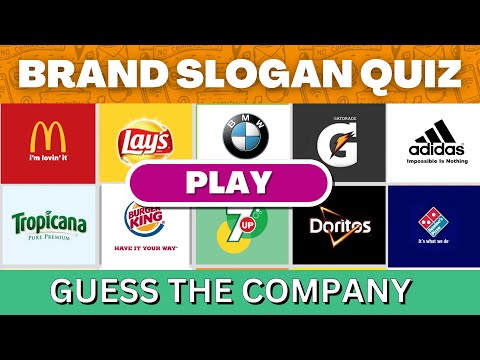
Understanding the distinction between a business slogan, a tagline, and a mission statement is critical for building a cohesive brand strategy. While these terms are often used interchangeably in casual conversation, they serve different strategic functions.

| Element | Purpose | Typical Length | Audience |
| Business Slogan | Marketing hook — memorable and promotional | 3–7 words | General consumers and prospects |
| Tagline | Brand descriptor — reinforces identity across campaigns | 3–8 words | Broad audience; campaign-specific |
| Mission Statement | Internal and external declaration of purpose and values | 1–3 sentences | Employees, stakeholders, partners |
A business slogan is inherently marketing-facing and designed to capture attention quickly. A mission statement, by contrast, is a longer-form declaration that guides internal decision-making and communicates your organization’s reason for existing. Many brands use both a slogan and a mission statement, deploying each in the appropriate context — slogans in advertisements and packaging, mission statements on corporate websites and annual reports.
Expert Tips for Testing and Refining Your Business Slogan
Once you have a strong candidate, do not assume it is ready for launch. Professional brand strategists use several testing methodologies to validate their slogans before committing to a full rollout.
- The 24-hour recall test. Show your slogan to a sample group, wait one full day, and then ask them to recite it from memory. If fewer than 70% can recall it accurately, the phrase needs simplification.
- The competitor filter. Search for similar slogans in your industry. If your phrase could belong to any competitor, it lacks the distinctiveness needed to build brand equity.
- The context versatility check. Place your slogan on a business card, a social media post, a television commercial script, and a store signage mockup. Does it read naturally in every format?
- The emotional response survey. Ask respondents to describe how your slogan makes them feel. Aim for emotions that align with your brand positioning — confidence, joy, trust, or excitement.
- The long-term stress test. Read your slogan five years from now and ask whether it still feels fresh and relevant. Slogans that rely heavily on current events or fleeting trends will quickly become dated.
These testing protocols are not optional luxuries — they are essential safeguards that prevent costly rebranding mistakes and ensure your business slogan earns its place as a lasting brand asset.
Conclusion
A business slogan is one of the most high-leverage investments you can make in your brand’s long-term success. It is the phrase that follows your logo, echoes in your customer’s mind, and distills your entire value proposition into a handful of words. By understanding the core characteristics of effective slogans, studying the masters, following a disciplined creation process, and rigorously testing your candidates, you can craft a business slogan that does more than sound clever — it builds recognition, fosters trust, and drives business growth for years to come.
Start by clarifying your brand’s emotional core, brainstorm freely, and never settle for a phrase that feels generic. Your slogan is your brand’s voice in a world full of noise — make every word count.
Frequently Asked Questions
How long should a business slogan be?
The ideal length for a business slogan is between three and seven words. This range strikes the balance between being concise enough to remember and long enough to convey meaningful brand messaging. Exceptionally powerful slogans sometimes fall outside this range, but brevity remains the guiding principle for maximum recall and impact.
Can a business slogan be changed over time?
Yes, businesses can and do update their slogans, but doing so should be a strategic decision driven by brand evolution, market repositioning, or outdated messaging. Frequent slogan changes can confuse customers and dilute brand recognition, so most companies treat their tagline as a long-term investment rather than a quarterly refresh.
A traditional business slogan is designed for broad brand communication across all channels, while a hashtag slogan is specifically optimized for social media engagement, campaign tracking, and user-generated content. Some brands use the same phrase for both purposes, but the most sophisticated strategies distinguish between a permanent brand slogan and temporary campaign-specific hashtags.
Is it better to use a slogan or a mission statement in marketing materials?
For most marketing materials — advertisements, packaging, social media, and website hero sections — a business slogan is more effective because it is shorter, more emotionally punchy, and designed for quick consumption. Mission statements are better suited for investor materials, corporate pages, and internal communications where depth and strategic detail are expected.
How do I trademark a business slogan?
To legally protect your business slogan, you must file a trademark application with the relevant intellectual property office in your jurisdiction, such as the United States Patent and Trademark Office (USPTO). The slogan must be distinctive and not already registered for similar goods or services. Consulting with an intellectual property attorney is strongly recommended to navigate the registration process and avoid potential conflicts.