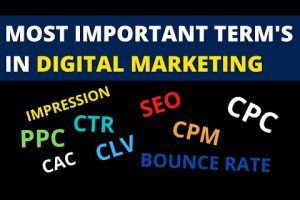
Understanding digital marketing terminologies is no longer optional for anyone who wants to thrive in the online business world. Whether you are a startup founder, a freelance marketer, or a seasoned entrepreneur trying to scale your brand, knowing the exact meaning of these terms gives you a serious competitive edge. The digital marketing landscape evolves rapidly, and so does its vocabulary. From cost per click to customer acquisition cost, each term represents a strategic concept that directly impacts your campaigns, your budget, and your bottom line. This comprehensive guide breaks down the most essential digital marketing terminologies across beginner, intermediate, and advanced levels, giving you the clarity and confidence to make smarter marketing decisions.
What Are Digital Marketing Terminologies and Why Do They Matter?
Digital marketing terminologies are the specialized words and phrases used to describe strategies, metrics, tools, and processes within the online marketing ecosystem. These terms serve as the common language between marketers, designers, data analysts, and business stakeholders. Without a solid understanding of this vocabulary, communicating campaign goals, interpreting performance reports, and evaluating agency proposals becomes incredibly difficult. More importantly, many of these terms carry precise definitions that affect how you allocate budgets and measure return on investment. When you understand what impression truly means versus a click, or how engagement rate differs from conversion rate, you stop guessing and start strategizing with purpose.
The significance of these terminologies extends beyond individual campaigns. They shape how entire marketing teams collaborate, how agencies bill clients, and how businesses benchmark their performance against competitors. As search engine algorithms and social media platforms continuously update their features, new terminologies emerge regularly. Staying current is not just about sounding knowledgeable in meetings; it is about making data-driven decisions that grow your brand sustainably.
Essential Digital Marketing Terminologies for Beginners
If you are just getting started with online marketing, these foundational terms will form the backbone of your learning journey. Mastering them early saves you from confusion later when more complex strategies are discussed.
Key Beginner-Level Terms You Must Know
- SEO (Search Engine Optimization) – The process of optimizing your website and content to rank higher in organic search engine results pages (SERPs).
- SEM (Search Engine Marketing) – A broader strategy that includes both SEO and paid search advertising, such as Google Ads campaigns.
- CTR (Click-Through Rate) – The percentage of people who click on your link after seeing it, calculated by dividing clicks by impressions.
- CPC (Cost Per Click) – The amount you pay each time someone clicks on your paid advertisement.
- Impressions – The total number of times your content or ad is displayed, regardless of whether anyone interacts with it.
- KPI (Key Performance Indicator) – A measurable value that demonstrates how effectively you are achieving specific marketing objectives.
- CTA (Call to Action) – A prompt on your website or ad that encourages visitors to take a specific step, such as signing up or purchasing.
- Landing Page – A standalone web page designed specifically for a marketing campaign where visitors arrive after clicking a link.
- Bounce Rate – The percentage of visitors who leave your website after viewing only one page without taking further action.
- Lead Generation – The process of attracting and converting strangers into prospects who have shown interest in your product or service.

Each of these terms represents a building block in your digital marketing knowledge. When combined, they form the framework for understanding how traffic flows from search engines and social platforms into your sales funnel.
How These Terms Connect in Practice
Consider a simple scenario. You run a Google Ads campaign targeting the keyword best running shoes for beginners. Your ad generates 10,000 impressions. Out of those, 500 people click through, giving you a CTR of 5%. You spend a total of $500 on that campaign, meaning your CPC is $1.00. On the landing page you created, 50 of those 500 visitors sign up for your email list, resulting in a conversion rate of 10%. This entire flow relies on you understanding and connecting each term to the next. Without this knowledge, you would have no idea whether your campaign was succeeding or failing.
Intermediate and Advanced Digital Marketing Terminologies
Once you have a firm grasp of the basics, you will encounter more sophisticated terminologies that reflect deeper strategic concepts. These terms are critical for anyone managing budgets, interpreting analytics, or leading marketing teams.
Intermediate Terms Every Marketer Should Understand
- CPA (Cost Per Acquisition) – The total cost of acquiring one paying customer through a specific marketing channel.
- ROAS (Return on Ad Spend) – A metric that measures the revenue generated for every dollar spent on advertising.
- LTV (Lifetime Value) – The total revenue a business can expect from a single customer over the entire relationship.
- A/B Testing – A method of comparing two versions of a webpage, ad, or email to determine which performs better.
- Remarketing – A strategy that targets users who previously visited your website but did not convert.
- Native Advertising – Paid ads that match the look, feel, and function of the platform on which they appear.
- Drip Campaign – A series of pre-written emails sent to leads over time to nurture them toward a purchase decision.
Advanced Terminologies That Separate Experts from Amateurs
- Attribution Modeling – The framework used to determine which touchpoints in the customer journey deserve credit for a conversion.
- Programmatic Advertising – The automated buying and selling of digital ad inventory using real-time bidding technology.
- Customer Journey Mapping – The visual representation of every interaction a customer has with your brand from awareness to advocacy.
- Marketing Funnel Stages – The progression from awareness to consideration, intent, evaluation, and ultimately purchase and loyalty.
- Marketing Qualified Lead (MQL) – A lead that has engaged with your brand at a level indicating higher likelihood of becoming a customer compared to other leads.
- Customer Acquisition Cost (CAC) – The total cost of sales and marketing efforts required to acquire a new customer, including all associated expenses.
- Marketing Mix Modeling (MMM) – An analytical approach that quantifies the impact of various marketing channels on overall sales performance.
Comparison Table: Core Digital Marketing Metrics at a Glance
The following table provides a quick reference guide comparing the most frequently confused metrics in digital marketing. Keeping these distinctions clear helps you avoid costly misinterpretations when analyzing campaign performance.
| Metric | Definition | Formula | Why It Matters |
| CTR | Ratio of clicks to impressions | Clicks ÷ Impressions × 100 | Measures ad relevance and appeal |
| CPC | Cost paid per ad click | Total Ad Spend ÷ Total Clicks | Controls paid advertising budget efficiency |
| Conversion Rate | Percentage of visitors who complete a goal | Conversions ÷ Total Visitors × 100 | Indicates landing page and offer effectiveness |
| CPA | Total cost to acquire one customer | Total Campaign Cost ÷ New Customers | Evaluates overall campaign profitability |
| ROAS | Revenue earned per advertising dollar spent | Revenue from Ads ÷ Ad Spend | Directly measures advertising return |
| Bounce Rate | Percentage of single-page sessions | Single-Page Sessions ÷ Total Sessions × 100 | Reflects content relevance and user experience |
Expert Tips for Mastering Digital Marketing Vocabulary
Memorizing definitions alone will not make you proficient in digital marketing. The real skill lies in understanding how these terms interact within complex campaigns and business models. Here are practical tips from experienced marketers who have navigated this landscape successfully.
- Build a personal glossary. Every time you encounter a new term, write it down with a brief definition and a real-world example from a campaign you have worked on or studied.
- Practice with real dashboards. Google Analytics, Google Ads, and social media ad managers expose these metrics in live environments. The more you interact with the data, the faster the terms become second nature.
- Join marketing communities. Platforms like Reddit’s r/marketing, GrowthHackers, and various Slack groups expose you to how professionals actually use these terms in daily conversations.
- Read case studies regularly. Real-world examples contextualize abstract terms and show you how strategies are measured and optimized using these metrics.
- Ask for clarification in meetings. Never pretend to understand a term you do not. In professional settings, asking a direct question often earns more respect than nodding along without comprehension.
- Follow industry publications. Sources like Moz, Search Engine Journal, HubSpot, and Marketing Land regularly introduce evolving terminologies that reflect current trends in the field.
Conclusion
Digital marketing terminologies are far more than just jargon. They are the precise language of modern business growth, and mastering them transforms the way you plan, execute, and evaluate your marketing efforts. From understanding basic metrics like CTR and CPC to navigating advanced concepts like attribution modeling and marketing mix modeling, each term adds another layer of strategic capability to your skill set. The experts who consistently deliver results are not necessarily the ones with the most creative ideas; they are the ones who speak the language fluently, interpret data accurately, and connect every metric back to business outcomes. Invest the time to learn these terms deeply, apply them in real campaigns, and you will find yourself making better decisions faster than your competition.
Frequently Asked Questions
What is the difference between SEO and SEM in digital marketing terminologies?
SEO refers specifically to organic search optimization efforts aimed at improving your visibility without paying for placement. SEM encompasses the entire spectrum of search engine marketing, including both SEO and paid advertising strategies like Google Ads. While SEO focuses on long-term organic growth, SEM includes immediate paid visibility alongside your organic efforts.
How do you calculate customer acquisition cost in digital marketing?
Customer acquisition cost is calculated by dividing your total marketing spend across a specific period by the number of new customers acquired during that same timeframe. This total should include advertising costs, tool subscriptions, team salaries, and any other expenses directly tied to your acquisition efforts.
What does ROAS mean and how is it different from ROI?
ROAS, or return on ad spend, measures the revenue generated for every dollar invested specifically in advertising. ROI, or return on investment, is a broader metric that considers overall profit relative to total investment across all business costs. ROAS focuses exclusively on ad efficiency, while ROI gives you a holistic view of profitability.
Why is attribution modeling important for digital marketing strategy?
Attribution modeling determines which marketing touchpoints receive credit for a conversion. Without proper attribution, you cannot accurately determine which channels deliver the best results. This leads to wasted budget on underperforming channels and missed opportunities to invest more in what actually drives revenue.

What are the most important digital marketing KPIs for a small business?
For small businesses, the most impactful KPIs typically include conversion rate, customer acquisition cost, return on ad spend, and lifetime value. These four metrics provide a clear picture of how efficiently your marketing spend translates into profitable customer relationships.