Walking into the world of digital marketing lingo can feel like stepping into a foreign country where everyone speaks fluently except you. From CTR and CPA to retargeting and omnichannel, the terminology floating around the industry can be overwhelming. But here is the truth: understanding marketing jargon is not just about sounding smart at team meetings. It is the foundation of making smarter decisions, reading performance reports with confidence, and actually driving results. Whether you are a beginner just getting started or a business owner trying to decode what your agency is telling you, this guide breaks down the essential, intermediate, and advanced digital marketing terminology you need to know — in plain, practical language.
What Is Digital Marketing Lingo and Why It Matters
Digital marketing lingo refers to the specialized vocabulary, acronyms, and phrases used by professionals across channels like search engine optimization (SEO), pay-per-click advertising (PPC), email marketing, social media, and content strategy. These terms exist because they compress complex concepts into shorthand that saves time during fast-paced conversations and strategy sessions. But for someone on the outside, it can create a frustrating barrier between you and your own growth. When you understand the language, you stop being a passive observer and start making informed choices about budget allocation, campaign optimization, and team communication. Think of it as learning the grammar of an entire ecosystem that generates trillions of dollars in commerce every year.
Essential Digital Marketing Terms Every Beginner Should Know
If you are just dipping your toes into online marketing, start with these foundational terms that appear in almost every conversation:
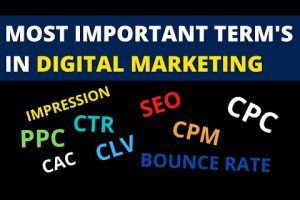
- Impressions — The number of times your content or ad was displayed on a screen, regardless of whether someone clicked it.
- Click-Through Rate (CTR) — The percentage of people who clicked your link after seeing it. It measures ad or content relevance.
- Cost Per Click (CPC) — The amount you pay each time someone clicks on your paid advertisement.
- Conversion Rate — The percentage of visitors who completed a desired action, such as filling out a form or making a purchase.
- Bounce Rate — The percentage of visitors who leave your website after viewing only one page without taking any further action.
- Keywords — The specific words or phrases users type into search engines, which marketers target to attract relevant traffic.
- Organic Traffic — Visitors who arrive at your site through unpaid search results, not through ads.
- ROI (Return on Investment) — A performance measure that evaluates the profitability of your marketing spend relative to the revenue generated.
These basic marketing terms form the vocabulary you will use daily. Master them first before moving to more layered concepts.
Intermediate Digital Marketing Terms That Boost Your Strategy
Once you have the basics down, the next level of digital marketing vocabulary gives you the ability to analyze campaigns more deeply and communicate with specialists effectively.
Understanding Funnel and Funnel Stages
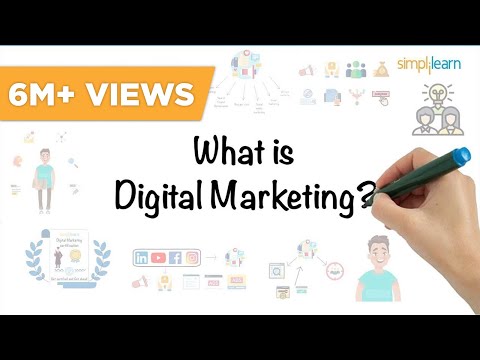
The marketing funnel maps a customer’s journey from initial awareness to final purchase. The standard stages include:
- Top of Funnel (TOFU) — The awareness stage where prospects first discover your brand through blog posts, social media, or paid ads.
- Middle of Funnel (MOFU) — Consideration stage where leads evaluate your offerings through case studies, comparison guides, or email nurture sequences.
- Bottom of Funnel (BOFU) — Decision stage where warm leads are ready to convert through demos, free trials, or checkout pages.

Key Intermediate Concepts
- Lead Scoring — A methodology that ranks prospects based on their engagement level and fit, helping your sales team prioritize the hottest leads.
- Customer Acquisition Cost (CAC) — The total cost of marketing and sales efforts divided by the number of new customers acquired in a given period.
- Customer Lifetime Value (CLV or LTV) — The predicted total revenue a single customer will generate over their entire relationship with your brand.
- Retargeting — A strategy that displays ads to users who previously visited your site but did not convert, keeping your brand top of mind.
- A/B Testing — The practice of comparing two versions of a webpage, ad, or email to determine which performs better against a specific metric.
- Drip Campaign — An automated series of emails sent on a predetermined schedule to nurture leads toward a conversion goal.
These terms signal that you are moving beyond surface-level understanding. When someone mentions attribution modeling or cohort analysis, you will at least know the general direction of the conversation.
Advanced Digital Marketing Jargon for Power Users
For marketers and business leaders who want serious competitive advantage, here are the advanced marketing terms that separate professionals from amateurs:
- Programmatic Advertising — The automated buying and selling of ad inventory using real-time bidding and algorithms, replacing manual negotiation with demand-side and supply-side platforms.
- Omnichannel Marketing — A seamless approach that integrates every customer touchpoint — web, mobile, email, in-store, and social — into one unified experience.
- Marketing Qualified Lead (MQL) — A lead that has demonstrated sufficient engagement to be considered ready for sales follow-up, as defined by your marketing team’s criteria.
- Customer Data Platform (CDP) — A system that consolidates first-party customer data from multiple sources into a single, unified profile for personalized marketing.
- Lookalike Audiences — A targeting method used in paid advertising that finds new users who closely resemble your existing high-value customers based on shared characteristics.
- Search Intent — The underlying goal behind a user’s search query, categorized as informational, navigational, transactional, or commercial investigation.
- Incrementality Testing — An experimental framework that measures the true causal impact of a marketing channel by comparing outcomes between exposed and control groups.
Understanding these concepts allows you to challenge assumptions, question reports, and advocate for strategies backed by data rather than buzzwords.
Common Confusions in Digital Marketing Language
Some terms sound similar but mean very different things. Use this comparison table to clarify the most commonly mixed-up concepts:
| Term Pair | What People Confuse | What They Actually Mean |
| Reach vs. Impressions | Used interchangeably | Reach counts unique viewers; impressions count total views including repeat views |
| Inbound vs. Outbound Marketing | Thought to be the same strategy | Inbound attracts customers through valuable content; outbound involves proactive outreach like cold calling and display ads |
| SEO vs. SEM | Treated as identical | SEO focuses on organic search rankings; SEM encompasses both organic and paid search efforts |
| Engagement Rate vs. Interaction Rate | Used as synonyms | Engagement rate typically includes likes, comments, shares, and saves; interaction rate may also factor in clicks and direct messages |
| Attribution vs. Incrementality | Believed to measure the same thing | Attribution assigns credit to touchpoints along a customer journey; incrementality measures the true causal lift from a specific campaign |
Expert Tips for Mastering Digital Marketing Vocabulary
- Build a personal glossary. Keep a running document of new terms you encounter. Add your own plain-language definitions to reinforce understanding.
- Read industry reports. Publications like HubSpot’s State of Marketing, Gartner’s CMO Spend Survey, and Search Engine Journal are goldmines for seeing marketing terminology used in real context.
- Practice in conversations. The best way to internalize language is to use it. Start incorporating terms naturally into team discussions and client calls.
- Follow thought leaders. People like Neil Patel, Rand Fishkin, and Ann Handley consistently use precise, up-to-date digital marketing slang that keeps you current.
- Ask questions without shame. No one expects you to know every acronym. The professionals who grow fastest are the ones who ask for clarification.
FAQs About Digital Marketing Lingo
What does CRM stand for in digital marketing?
CRM stands for Customer Relationship Management, referring to both the strategy of managing interactions with current and potential customers and the software platforms (like Salesforce, HubSpot, or Zoho) used to organize, automate, and synchronize those relationships across sales and marketing teams.
How is ROAS different from ROI in marketing?
ROAS (Return on Ad Spend) measures revenue generated for every dollar spent specifically on advertising. ROI (Return on Investment) is a broader metric that evaluates overall profitability of a marketing initiative, including costs like creative production, tools, and labor, not just ad spend alone.
What does it mean to have a high bounce rate?
A high bounce rate means a large percentage of visitors leave your site after viewing only a single page without interacting further. While a high bounce rate is not always negative — blogs and informational pages often have naturally high bounce rates — a spike in bounce rate on landing pages typically signals issues with page relevance, load speed, or user experience.
What is a black-hat SEO tactic?
Black-hat SEO refers to aggressive tactics that violate search engine guidelines to manipulate rankings. Examples include keyword stuffing, buying backlinks, cloaking, and hidden text. These practices may produce short-term gains but almost always result in penalties from Google and other search engines.
What is a KPI in marketing context?
A Key Performance Indicator (KPI) is a specific, measurable value that demonstrates how effectively a marketing campaign or strategy is achieving its core business objectives. Common marketing KPIs include conversion rate, customer acquisition cost, lifetime value, and organic traffic growth.
Final Thoughts on Digital Marketing Lingo
The world of digital marketing language is vast, evolving, and sometimes deliberately confusing. But the effort to decode it pays dividends in every area of your marketing career or business operations. From basic terms like impressions and keywords to advanced concepts like incrementality testing and programmatic advertising, each piece of vocabulary gives you a sharper lens through which to evaluate performance and strategy. Stop letting jargon intimidate you. Start building your fluency today, and you will find yourself not just keeping up with the conversation — you will be leading it. The most effective marketers are not the ones who memorize the most acronyms. They are the ones who understand what every term actually means in the context of real business outcomes.