


When it comes to selling on Amazon, visibility is everything. If your products aren’t being seen, they aren’t being bought. That’s precisely where the Amazon display advertising platform steps in — offering sellers and brands a powerful way to reach shoppers both on and off Amazon. Whether you’re a beginner just starting out or a seasoned advertiser looking to refine your strategy, understanding how this platform works can dramatically impact your sales, brand awareness, and bottom line. In this comprehensive guide, we’ll break down everything you need to know about Amazon display advertising, from foundational concepts to advanced tactics that drive real results.
What Is the Amazon Display Advertising Platform?
Understanding Amazon’s Ad Ecosystem
The Amazon display advertising platform refers to a suite of advertising tools that allow sellers and brands to showcase their products through visually driven ad placements across Amazon’s vast digital network. Unlike Sponsored Products ads — which appear in search results — display ads focus on visual, banner-style creatives that can appear on product detail pages, storefronts, and even third-party websites and apps through Amazon’s ad network.
This platform is part of Amazon’s broader advertising ecosystem, which includes Sponsored Products, Sponsored Brands, and Amazon DSP (Demand-Side Platform). Together, these tools form one of the most robust advertising environments available to ecommerce marketers today. Amazon processes over 300 million customer visits monthly, making it one of the first places shoppers turn to when they’re ready to buy — and display ads help you intercept them at the right moment.
How Amazon Display Ads Work
Ad Formats and Placements
Amazon offers several display ad formats, each designed for specific marketing objectives:
- Standard Display Ads: Image-based ads that appear on Amazon product pages, search results, and across the Amazon Audience Network.
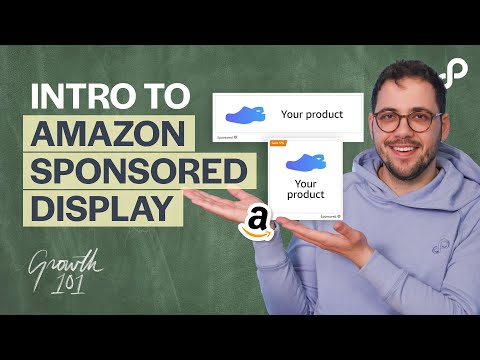
- Sponsored Display Ads: Self-service ads that allow sellers to target shoppers by product interest, competitor ASINs, or lifestyle categories directly within the Amazon Advertising Console.
- Video Ads: Engaging video creatives displayed on Amazon-owned properties and partner sites.
- Amazon DSP Ads: Programmatic display and video ads served across millions of websites, mobile apps, and connected TV devices.
Targeting Methods
One of the most powerful aspects of the Amazon display advertising platform is its sophisticated targeting capabilities. Amazon uses first-party data from hundreds of millions of active customer accounts to deliver highly relevant ad placements. Key targeting methods include:
- Product Targeting: Your ads appear on pages featuring complementary or competitor products. You can target by ASIN, category, or brand.
- Interest-Based Targeting: Amazon matches your ads to shoppers based on their browsing and purchasing behavior across categories.
- Viewable Impression Targeting: Ads are shown to users who have previously viewed your products or similar items, enabling powerful retargeting strategies.
- Lifestyle and Demographic Targeting: Reach audiences based on lifestyle segments, household demographics, or purchase intent signals.
Setting Up Your First Amazon Display Ad Campaign
Step-by-Step Guide for Beginners

Getting started with the Amazon display advertising platform is straightforward if you follow a structured approach. Here’s a step-by-step breakdown:
- Sign Up for Amazon Advertising: If you haven’t already, create an Amazon Advertising account through seller central or vendor central.
- Define Your Campaign Goal: Choose between brand awareness, traffic, or conversions as your primary objective.
- Select Your Ad Type: Decide between Sponsored Display (self-service) or Amazon DSP (programmatic, often managed with agency support).
- Choose Targeting: Pick your targeting method — product targeting, interest targeting, or audience targeting based on your goals.
- Create Your Creative: Upload your ad images or video. Amazon provides guidelines on image dimensions, file types, and content requirements.
- Set Your Budget and Bids: Define your daily or campaign-level budget and bidding strategy. Start with automatic bidding and transition to manual bidding as you gather performance data.
- Launch and Monitor: Once your campaign goes live, monitor key metrics like impressions, click-through rate (CTR), cost-per-click (CPC), and return on ad spend (ROAS) regularly.
Pro Tips for Campaign Setup
To get the most out of your initial campaigns, start with a modest budget and test multiple targeting options simultaneously. This allows you to gather data on which audience segments respond best to your messaging. Remember that Amazon’s algorithm rewards consistency — campaigns that maintain stable budgets over time tend to improve in efficiency as the platform optimizes ad delivery.
Key Benefits of Amazon Display Advertising
Why Advertisers Choose Amazon’s Display Platform
The Amazon display advertising platform offers several compelling advantages that make it a must-have in any ecommerce marketing strategy:
- Shopper Intent: Unlike traditional display networks where users may be browsing casually, Amazon shoppers are actively in a buying mindset. Your ads reach people who are ready to purchase.
- Rich First-Party Data: Amazon has unparalleled insight into customer behavior — purchase history, browsing patterns, wish lists, and review activity — all of which fuel more precise ad targeting.
- Closed-Loop Attribution: Because Amazon owns both the ad placement and the checkout experience, you can track the full customer journey from ad impression to purchase, giving you clearer ROI visibility.
- Brand Defense: Display ads allow you to protect your brand by ensuring your messaging appears prominently on your own product pages and prevents competitors from capturing your audience.
- Cross-Channel Reach: Through Amazon DSP, your display ads can extend beyond Amazon’s ecosystem to reach shoppers on third-party websites, streaming platforms, and mobile apps.
Amazon DSP vs. Amazon Advertising Console: Understanding the Difference
A common source of confusion for advertisers is the distinction between Amazon DSP and the self-service Amazon Advertising Console. Both are part of the Amazon display advertising platform, but they serve different needs and experience levels.
| Feature | Amazon Advertising Console (Sponsored Display) | Amazon DSP |
| Ease of Use | Self-service, beginner-friendly | Often requires agency or partner management |
| Ad Types | Standard display and video ads on Amazon properties | Display, video, audio, and connected TV ads across the web |
| Targeting Reach | On-Amazon and limited off-Amazon | Massive off-Amazon reach across millions of sites |
| Buying Model | CPC-based, self-service bidding | Programmatic auction-based (CPM and CPC) |
| Best For | Sellers and brands starting out with display | Advanced advertisers and agencies seeking scale |
| Minimum Spend | No minimum | Typically $35,000+ or through a DSP partner |
For most sellers and small-to-mid-sized brands, starting with Sponsored Display ads through the Amazon Advertising Console is the recommended approach. As your campaigns mature and you need broader reach, transitioning to Amazon DSP becomes a logical next step.
Advanced Strategies for Maximizing ROAS
Optimizing Display Campaigns Like a Pro
Once you’re comfortable with the basics, these advanced strategies can help you squeeze more performance out of your Amazon display ad spend:
- Leverage Retargeting Strategically: Set up view-through and click-through retargeting campaigns to re-engage shoppers who interacted with your listings but didn’t convert. Retargeting on Amazon display ads typically delivers 3x higher conversion rates than prospecting campaigns.
- Use Competitor ASIN Targeting: Place your display ads directly on your competitors’ product detail pages. This positions your product as an alternative and captures high-intent shoppers at the decision point.
- Test Multiple Creatives: Don’t rely on a single ad image. Upload multiple creative variations and let Amazon’s system identify which visuals drive the highest engagement and conversion rates.
- Layer Your Targeting: Combine product targeting with interest-based targeting to create overlapping audience segments. This increases your ad’s relevance and improves quality scores.
- Monitor and Adjust Bids Weekly: Review campaign performance at least weekly. Increase bids on high-converting placements and reduce spend on underperforming segments.
- Integrate with Offline Data: If you have a CRM or offline customer database, you can upload it to Amazon DSP to create custom audiences and measure cross-channel lift.
Understanding Amazon’s Quality-Based Bidding
Amazon uses a quality-based bidding system that factors in your ad’s expected CTR, conversion rate, and relevance to the targeted audience. This means that even if your competitor has a higher bid, your ad can win the auction if it delivers a better user experience. To win more often, focus on creating compelling creatives, writing clear and relevant ad copy, and targeting tightly defined audience groups.
Common Mistakes to Avoid with Amazon Display Ads
Even experienced advertisers can fall into traps that erode their ad budget and reduce effectiveness. Here are the most common pitfalls:
- Ignoring Data Quality: Low-quality product images or misleading ad copy will tank your CTR and waste spend. Invest in professional photography and honest, benefit-driven messaging.
- Over-Targeting: Casting too wide a net dilutes your relevance. Focus on specific ASINs, categories, or audience segments rather than broad, untargeted campaigns.
- Neglecting Mobile Optimization: A significant portion of Amazon traffic comes from mobile devices. Ensure your display creatives are optimized for smaller screens with clear, legible text and bold visuals.
- Setting and Forgetting: Amazon display campaigns require ongoing attention. Stale campaigns with unchanged bids and creatives quickly lose efficiency.
- Measuring Only Last-Click Attribution: Many conversions are influenced by multiple touchpoints. Use Amazon’s attribution reports and consider view-through metrics to get a fuller picture of your ad impact.
Real-World Performance Benchmarks

To set realistic expectations, here are typical performance benchmarks for the Amazon display advertising platform:
- Average CTR: 0.3% – 0.9% for standard display ads; higher for retargeting campaigns (1%+)
- Average CPC: $0.15 – $0.50 depending on category and competition
- Average Conversion Rate: 5% – 15% for retargeting; 1% – 5% for prospecting
- Typical ROAS: 3x – 8x depending on product margin and campaign type
Keep in mind that these benchmarks vary widely by product category, seasonality, and competitive intensity. The key is continuous testing and optimization rather than chasing average numbers.
Frequently Asked Questions (FAQs)
1. What is the difference between Amazon Sponsored Display ads and Amazon DSP display ads?
Sponsored Display ads are self-service, managed through the Amazon Advertising Console, and primarily target shoppers on Amazon and a limited off-Amazon network. Amazon DSP is a programmatic, often agency-managed platform that offers broader reach across millions of websites, apps, and connected TV devices, along with advanced audience targeting and offline data integration capabilities.
2. How much does it cost to run display ads on Amazon?
There’s no minimum spend for Sponsored Display campaigns — you can start with as little as $10 per day. However, Amazon DSP campaigns typically require a minimum commitment of around $35,000 or must be managed through an approved DSP partner. Costs are based on a bidding system where you pay per click (CPC) or per thousand impressions (CPM) depending on the campaign type.
3. Can I target specific Amazon customers with my display ads?
Yes. Amazon’s display platform allows you to target shoppers based on their browsing behavior, purchase history, interest categories, and even specific ASINs they’ve viewed. You can also create remarketing lists to re-engage customers who have previously interacted with your products.
4. How long does it take to see results from Amazon display advertising?
Initial data and performance signals typically emerge within 1–2 weeks. However, for retargeting campaigns, results can appear within days since you’re reaching warm audiences. For prospecting campaigns, allow at least 7–14 days for Amazon’s algorithm to optimize delivery and for meaningful conversion data to accumulate.
5. Is Amazon display advertising worth it for small sellers?
Absolutely. Small sellers can benefit significantly from Sponsored Display ads because they offer low entry barriers, precise product targeting, and access to Amazon’s high-intent shopper base. Start small, test different strategies, and scale what works.
6. How do I create effective display ad creatives for Amazon?
Effective Amazon display creatives should feature high-quality product images with clean backgrounds, minimal text (Amazon recommends no more than 20% text coverage), and a clear value proposition. A/B test different images, headlines, and calls-to-action to identify what resonates most with your target audience.
Conclusion
The Amazon display advertising platform represents one of the most powerful and underutilized tools available to ecommerce sellers and brands. With its sophisticated targeting capabilities, vast reach across Amazon’s ecosystem and beyond, and deep integration with Amazon’s first-party customer data, it offers a unique advantage that few other advertising platforms can match. Whether you’re running your first Sponsored Display campaign or managing complex programmatic buys through Amazon DSP, the key to success lies in continuous optimization, creative testing, and a deep understanding of your target audience. Start implementing the strategies outlined in this guide, stay disciplined with your budget management, and watch your Amazon advertising performance reach new heights.