The world of social media advertising campaigns is evolving at a dizzying pace. Every year, brands pour billions of dollars into paid social strategies, and only a select few manage to truly break through the noise. If you’re looking to craft a campaign that doesn’t just sit in a feed but actually drives measurable results—awareness, engagement, conversions, or all three—you need to understand what separates the best social media advertising campaigns from the forgettable ones. This guide dives deep into real campaign examples, proven strategies, platform-specific tactics, and expert-level tips that will help you build social media ad campaigns capable of delivering serious ROI in today’s hyper-competitive digital landscape.
What Makes a Social Media Advertising Campaign Truly Successful?
Before we jump into specific social media campaign examples, let’s establish what “success” actually looks like. Too many marketers fixate on vanity metrics—likes, shares, impressions—while ignoring the metrics that genuinely move the needle. A truly successful paid social campaign aligns its objectives with measurable business outcomes.
Here are the core pillars that separate winning campaigns from mediocre ones:
- Strategic alignment: Every ad supports a specific business goal, whether that’s brand awareness, lead generation, or direct sales.
- Audience precision: The best campaigns leverage advanced targeting—demographics, behavioral data, lookalike audiences, and retargeting—to reach the right people at the right moment.
- Creative excellence: Thumb-stopping visuals and copy that feel native to the platform, not like a billboard crammed into a feed.
- Data-driven iteration: Top advertisers continuously test and optimize based on real performance data, not gut feelings.
- Platform fluency: Each social platform has unique algorithms, content formats, and user behaviors. The best campaigns respect those differences.
Top Social Media Advertising Campaigns That Dominated in 2024
Spotify’s annual Wrapped campaign is a masterclass in leveraging user-generated data for social amplification. By turning listening habits into visually engaging, highly shareable graphics, Spotify turned every user into a potential brand ambassador. The campaign generates millions of organic impressions each year, effectively making paid social amplification almost unnecessary for awareness. The genius lies in personalization—no two Wrapped cards look alike—which drives massive engagement and social sharing.

2. Dove’s #TurnYourBack Campaign — Purpose-Driven Social Advertising
Dove continues to prove that social media ad optimization isn’t just about A/B testing headline variations. Their #TurnYourBack campaign invited women to turn their backs to their phones and reclaim their time from toxic digital beauty standards. The campaign ran across Instagram, TikTok, and YouTube, combining influencer partnerships with paid promotion. It demonstrated that emotionally resonant storytelling, when paired with precise audience targeting, outperforms hard-sell advertising every time.
3. Airbnb’s Community-Focused TikTok Strategy
Airbnb’s TikTok presence—and its paid amplification strategy—centers on real user stories. Instead of polished corporate ads, they amplify authentic travel experiences created by hosts and guests. This approach leverages the social media advertising format that TikTok’s algorithm naturally favors: native-feeling, short-form video content. By boosting high-performing organic posts rather than creating separate ad creative, Airbnb reduces production costs while maintaining authenticity.
Key Strategies Behind the Best Social Media Campaigns
If you distill the common threads from the most effective digital marketing strategies across platforms, several recurring patterns emerge. These aren’t secrets—they’re disciplines that many marketers neglect.
- Lead with creative, not strategy. The best campaign ideas start with a compelling creative concept, and the targeting and budget follow behind it. Great creative outperforms mediocre creative regardless of targeting precision.
- Use the “mobile-first” rule. Over 80% of social media consumption happens on mobile devices. Every piece of ad creative should be designed for a small screen first—vertical video, bold text, minimal visual clutter.
- Layer your funnel approach. The most successful paid social campaigns use a tiered structure: awareness ads targeting broad audiences, consideration ads retargeting engagers, and conversion ads retargeting high-intent users. This layered approach maximizes efficiency at every stage.
- Embrace platform-native formats. Reels on Instagram, TikToks on TikTok, Stories on Facebook and Snapchat—each platform rewards content that feels like it belongs there. Ads that look like ads often get scrolled past.
- Set up robust measurement infrastructure. Without proper tracking—Pixel installations, conversion API setups, UTM parameters—you’re flying blind. Data infrastructure should be built before the first ad goes live.
A Beginner’s Guide to Creating Your First Social Media Ad Campaign
Starting from scratch can feel overwhelming, but breaking the process into clear phases makes it manageable. Here’s a step-by-step roadmap for launching your first best social media ads campaign:
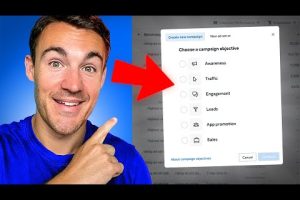
- Step 1: Define your objective. Are you trying to build awareness, drive website traffic, collect leads, or generate sales? Your objective shapes every subsequent decision.
- Step 2: Choose your platform(s). Different platforms serve different audiences. Instagram and TikTok skew younger; Facebook has strong 30–55+ demographics; LinkedIn dominates B2B. Pick where your audience actually spends time.
- Step 3: Research your audience. Use platform analytics tools, surveys, and competitor analysis to build detailed audience profiles. Create 2–3 distinct audience segments to test.
- Step 4: Create compelling creative. Invest significant time in your visuals and copy. Plan at least 3–5 creative variations per ad set to give the algorithm enough options to optimize.
- Step 5: Set your budget and bidding strategy. Start conservatively—$20 to $50 per day per ad set is often enough to gather meaningful data in the initial testing phase.
- Step 6: Launch, monitor, and optimize. Check performance daily during the first week. Let winning ads accumulate impressions, pause underperformers, and iterate on creative and targeting.
Intermediate and Advanced Techniques for Scaling Campaigns
Advanced Audience Targeting with Predictive Modeling
Once your campaign is performing well, move beyond basic demographic targeting. Platforms like Meta now offer predictive audience tools that use machine learning to identify users most likely to convert based on historical data. Combine these with custom audiences built from your website visitors, email lists, and app users for maximum precision. This level of paid social media targeting dramatically reduces cost-per-acquisition for experienced advertisers.
Creative Refresh Strategies
Ad fatigue is real. When your social media ad optimization metrics start declining—rising CPMs, falling CTRs—it’s usually a sign that your audience has seen your creative too many times. Plan creative refreshes on a 2–3 week cycle. Keep a backlog of approved creative assets ready so you can swap them in seamlessly without disrupting your campaign’s momentum.
Automated Rules and Bulk Editing
At scale, manual management becomes unsustainable. Set up automated rules in your ad manager—like pausing ads that spend beyond budget thresholds or increasing budget for ads hitting specific ROAS targets. Use bulk editing tools to update creative, copy, or targeting across multiple campaigns simultaneously. This saves hours of manual work and prevents costly mistakes from human error.
Platform Comparison: Where to Run Your Social Media Ads
| Platform | Best For | Primary Audience Age | Ad Format Strengths | Average CPM Range |
| Meta (Facebook/Instagram) | E-commerce, lead generation, brand awareness | 25–55+ | Reels, Stories, carousel, collection ads | $8–$15 |
| TikTok | Gen Z and Millennial reach, viral potential | 18–35 | In-feed video, Spark Ads, TopView | $5–$10 |
| B2B marketing, professional services | 30–55+ | Sponsored content, Message Ads, Document Ads | $15–$40 | |
| YouTube (via Google Ads) | Long-form video, awareness, pre-roll | 25–55 | TrueView, Shorts, Discovery ads | $8–$20 |
| Visual products, home, fashion, DIY | 25–50 | Idea Pins, Shopping ads, Discovery | $5–$12 |
This comparison highlights why the best social media advertising campaigns are often platform-specific rather than one-size-fits-all. A B2B SaaS company would waste budget on TikTok, while a Gen Z fashion brand would find LinkedIn pointless. Match the platform to the audience and product category.
Expert Tips for Maximizing ROI on Social Media Advertising
Drawing from years of managing high-budget social media campaigns across multiple platforms, here are the insights that consistently separate top performers from average advertisers:
- Test one variable at a time. Changing the audience, creative, and objective simultaneously tells you nothing. Isolate variables to learn what actually drives performance.
- Prioritize the first 30 minutes. Algorithms need initial data to optimize. Budget allocation during the first 30 minutes can disproportionately impact campaign performance. Many advertisers accidentally starve their best ad sets during this critical window.
- Leverage retargeting aggressively. Retargeting typically delivers 3–5x higher conversion rates than prospecting. Build retargeting audiences based on video views (50%+ completion), website visitors, and add-to-cart actions.
- Use conversion-focused landing pages. Even the best ad creative fails if the post-click experience is poor. Ensure your landing page loads in under 3 seconds, has a clear CTA, and matches the ad’s messaging and visual identity.
- Monitor frequency closely. When frequency exceeds 3–4 for a retargeting audience, it’s time to refresh creative or expand to new audiences. Oversaturation erodes both performance and brand perception.
Conclusion: Building Campaigns That Last
The landscape of social media advertising will continue to shift—new platforms will emerge, algorithms will change, and consumer behaviors will evolve. But the principles behind the best social media advertising campaigns remain remarkably consistent: understand your audience deeply, create content that feels native and compelling, measure everything rigorously, and iterate relentlessly. Whether you’re a beginner launching your first Facebook ad or an advanced marketer orchestrating a multi-platform global campaign, these fundamentals are your competitive advantage. Start with a strong concept, let data guide your decisions, and never stop testing. That’s how you build campaigns that don’t just perform—they endure.
Frequently Asked Questions About Social Media Advertising Campaigns
For small businesses, Meta platforms (Instagram and Facebook) and TikTok typically offer the best balance of low entry costs, sophisticated targeting tools, and large user bases. Instagram is particularly effective for visual products and local services. Facebook remains powerful for reaching 30+ demographics with highly granular targeting. TikTok is ideal for businesses targeting Gen Z and Millennials with engaging short-form video content. Start with one platform, master it, then expand.
You can start seeing meaningful data with as little as $20–$50 per day per ad set. For a comprehensive test across multiple audiences and creatives, a daily budget of $150–$300 is recommended. The key isn’t total budget—it’s how you allocate and optimize. Smaller budgets can still deliver strong ROI if your creative and targeting are sharp.
Organic social media refers to content you post for free and that appears in your followers’ feeds. Reach is limited by algorithm distribution. Paid social media advertising involves spending money to boost posts or run ads targeted to specific audience segments, giving you access to far broader audiences with precise targeting capabilities. The best strategies combine both—using organic content to build trust and paid ads to scale reach and conversions.
Success metrics depend on your campaign objective. For awareness campaigns, track impressions, reach, and brand lift. For engagement campaigns, monitor CTR, comments, and shares. For conversion campaigns, focus on cost per acquisition (CPA), return on ad spend (ROAS), and conversion rate. Set up proper tracking infrastructure—Pixels, conversion API, and UTM parameters—before launch to ensure accurate measurement.
Plan creative refreshes every 2–3 weeks for active campaigns. Watch for signs of ad fatigue: declining CTR, rising CPMs, and dropping conversion rates. Maintain a creative backlog of 5–10 approved variations so you can swap assets without pausing your campaigns. Fresh creative keeps your audience engaged and signals to the algorithm that your ads remain relevant.
Yes, and many top advertisers do, but with important caveats. Each platform requires its own creative format, audience research, and optimization approach. Rather than running identical campaigns everywhere, adapt your core concept for each platform’s native format. Use campaign management tools or automation platforms to centralize reporting across channels while allowing platform-specific execution teams the flexibility to optimize locally.