The world of digital advertising has evolved dramatically over the past decade, and at the heart of this transformation lies the display campaign. Whether you’re a marketing manager launching your first visual ad or a seasoned growth strategist scaling programmatic buying across multiple markets, understanding how display campaigns work is no longer optional — it’s essential. Display advertising remains one of the most powerful channels for building brand awareness, re-engaging lost visitors, and driving qualified traffic at scale. In this comprehensive guide, we’ll explore everything from foundational concepts to advanced optimization techniques, giving you the knowledge to launch display campaigns that genuinely move the needle.
What Is a Display Campaign?
A display campaign is a form of online advertising that uses visual-based ad formats — including banners, images, interactive media, and video — placed across a network of publisher websites, mobile apps, and digital platforms. Unlike search ads, which appear in response to specific user queries, display ads are primarily contextually or behaviorally targeted, meaning they’re shown based on user interests, browsing history, or the content of the page being viewed.
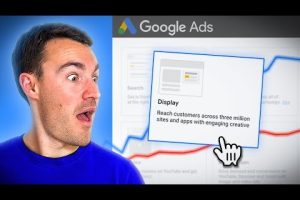
The most well-known platform for running display campaigns is the Google Display Network (GDN), which reaches over 90% of internet users globally across more than two million websites. However, display advertising also extends to programmatic platforms like DV360 (Display & Video 360), The Trade Desk, and social media channels such as Meta and LinkedIn, each offering unique targeting capabilities and ad formats.
Why Display Campaigns Still Matter in 2024 and Beyond
Despite the rise of privacy regulations and signal loss, display advertising continues to deliver impressive results. Here’s why:
- Massive reach: Display networks offer unprecedented scale, allowing advertisers to reach billions of users across the open web.
- Brand awareness: Visual impressions create memorable associations that search ads alone cannot achieve.
- Retargeting power: Display campaigns excel at re-engaging users who have already shown interest but haven’t converted.
- Diverse formats: From static banners to rich media and native ads, display offers creative flexibility.
- Cost efficiency: With CPM models often significantly cheaper than search CPC, display campaigns can deliver strong cost-per-acquisition when optimized correctly.
Types of Display Ad Formats
Choosing the right ad format is one of the most critical decisions in any display campaign strategy. Each format serves a different purpose and performs differently depending on your campaign objectives.
Standard Banner Ads
These are the traditional image-based advertisements that appear in standard sizes like 300×250 (medium rectangle), 728×90 (leaderboard), and 160×600 (wide skyscraper). They’re reliable, universally supported, and work well for both brand awareness and direct response campaigns.
Native Ads
Native display ads blend seamlessly into the content feed of a publisher’s site, matching the look and feel of the surrounding editorial content. They consistently deliver higher CTRs than standard banners because they don’t trigger the “banner blindness” effect that plagues traditional ad placements.
Rich Media Ads
Rich media ads incorporate interactive elements — expandable panels, video, animations, games, or forms — that encourage user engagement beyond a simple click. These are ideal for product launches and interactive brand experiences.
Video Display Ads
Video-in-display formats combine the visual impact of video with the contextual placement of display. These appear as in-feed video units or as pre-roll content on publisher video players, and they’re growing rapidly in importance.
How to Set Up a Display Campaign: Step by Step
Launching a successful display campaign requires more than just uploading an image and hitting “publish.” Here’s a structured approach that works for both beginners and intermediate marketers:
- Define your campaign objective: Are you building awareness, generating leads, or driving conversions? Your objective shapes every subsequent decision.
- Choose your platform: Google Ads, Microsoft Advertising, or a programmatic DSP — each has different strengths.
- Set your budget and bidding strategy: Start with manual CPC or maximize conversions mode depending on your data maturity.
- Design your ad creatives: Build multiple variations in different sizes and formats to maximize inventory access.
- Configure targeting: Layer demographic, interest, contextual, and geographic targeting for precision.
- Set up conversion tracking: Without proper measurement, optimization is impossible.
- Launch, monitor, and iterate: Review performance weekly and make data-driven adjustments.
Display Ad Targeting Strategies
Targeting is what separates a mediocre display campaign from a high-performing one. The best advertisers layer multiple targeting methods to reach their ideal audience while controlling frequency and relevance.
Demographic Targeting
Segment your audience by age, gender, household income, and parental status. This is particularly effective for B2C campaigns where purchasing power correlates with demographics.
Interest-Based and Behavioral Targeting
Platforms like GDN categorize users based on their browsing behavior and declared interests. Categories range from broad segments like “travel enthusiasts” to niche groups like “home automation early adopters.” This approach works well for awareness campaigns where you want to reach people in the early stages of the decision funnel.
Contextual Targeting

This strategy places your display ads on web pages whose content aligns with your product or service. If you sell running shoes, your ad appears on fitness blogs and marathon event sites. Contextual targeting has surged in importance as third-party cookies phase out, making first-party contextual signals more valuable than ever.

Retargeting and Remarketing
Display retargeting shows ads to users who have previously visited your website or engaged with your app. This is arguably the highest-ROI targeting method in display advertising because you’re re-engaging people who already have brand familiarity. Dynamic retargeting — which shows users ads featuring the exact products they viewed — takes this even further.
Key Metrics and KPIs for Display Campaigns
Measuring the right things is critical. Here are the core metrics every display advertiser should track:
| Metric | Description | Ideal Use |
| Impressions | Number of times your ad was served | Brand awareness campaigns |
| Click-Through Rate (CTR) | Clicks divided by impressions | Measuring ad relevance and creative quality |
| CPM (Cost Per Mille) | Cost per thousand impressions | Assessing inventory cost efficiency |
| CPC (Cost Per Click) | Average cost for each click received | Traffic and conversion-focused campaigns |
| Conversion Rate | Conversions divided by clicks | Evaluating landing page and ad alignment |
| View-Through Rate (VTR) | Users who saw the ad and later converted | Measuring assist and brand lift impact |
One important truth about display campaigns: they rarely convert on their own in a last-click model. Most display conversions serve as assisted conversions, nudging users along a multi-touch journey before they eventually convert through another channel. Always analyze view-through conversions and multi-touch attribution data to understand the full impact of your display investment.
Display Campaign vs. Search Campaign: A Comparison
| Aspect | Display Campaign | Search Campaign |
| Ad Format | Visual banners, images, video | Text-based ads on search results |
| User Intent | Passive — users are browsing, not searching | Active — users have explicit intent |
| Targeting Method | Interest, behavior, context, retargeting | Keyword-based |
| Primary Strength | Brand awareness and retargeting | Capturing high-intent traffic |
| Typical CTR | 0.5% – 1.5% | 2% – 8% |
| Best For | Top-of-funnel and re-engagement | Bottom-of-funnel conversion |
The most effective digital strategies use both display and search campaigns in concert — display builds the funnel, search captures demand within it.
Advanced Display Campaign Optimization Tips
Once you’ve mastered the basics, these advanced techniques will take your display campaign performance to the next level:
- A/B test relentlessly: Test different headlines, imagery, CTAs, and landing pages. Even small creative changes can produce significant CTR improvements.
- Use audience segmentation: Create separate ad groups for different audience segments with tailored messaging and bidding strategies.
- Implement frequency capping: Avoid ad fatigue by limiting how many times the same user sees your ad within a given period.
- Leverage machine learning: Smart bidding strategies like Target CPA and Target ROAS use AI to optimize in real time — but they need sufficient conversion data to work effectively.
- Optimize for viewability: Ensure your ads are placed above the fold and on high-viewability placements. Google considers viewability a quality signal that affects your CPM.
- Exclude placements aggressively: Regularly review placement reports and block low-quality or irrelevant sites that drain your budget.
- Use site exclusions for competitors: Prevent your ads from appearing on competitor websites where they deliver zero ROI.
Common Display Campaign Mistakes to Avoid
Even experienced marketers stumble. Here are the most frequent pitfalls in display advertising:
- Running one ad in one size: This dramatically limits your reach across the Google Display Network’s diverse inventory. Always create ads in at least 3-4 standard sizes.
- Ignoring mobile optimization: Over 60% of display impressions occur on mobile devices. Your creatives and landing pages must be fully responsive.
- Setting and forgetting: Display campaigns require ongoing monitoring. Performance can shift quickly based on market conditions and audience saturation.
- Targeting too broadly: While reach matters, overly broad targeting dilutes relevance and inflates costs. Narrow your segments for better efficiency.
- Neglecting brand safety: Without proper content exclusions, your ads can appear on low-quality or inappropriate content, damaging your brand reputation.
The Future of Display Advertising
The display advertising landscape is undergoing significant shifts. The deprecation of third-party cookies is forcing advertisers to invest more heavily in first-party data strategies, contextual targeting, and privacy-compliant audience models. Google’s Privacy Sandbox initiatives, clean room technologies, and server-side tracking are reshaping how display campaigns are measured and optimized.
Simultaneously, AI-powered creative generation is lowering the barrier to producing high-quality display assets at scale. Tools that generate banner variations, optimize layouts, and predict creative performance are becoming indispensable for growth marketers. The advertisers who adapt to these changes will maintain a significant competitive advantage in the coming years.
Conclusion
The display campaign remains a cornerstone of digital marketing strategy when executed with intention and precision. From selecting the right ad formats and targeting methods to measuring assisted conversions and optimizing continuously, success in display advertising demands both strategic thinking and tactical discipline. Whether you’re a beginner exploring your first visual campaign or an advanced marketer scaling programmatic operations across multiple channels, the principles outlined here provide a strong foundation. Embrace testing, invest in quality creative, respect the user journey, and stay ahead of the privacy evolution — and your display campaigns will consistently deliver measurable, meaningful results.
Frequently Asked Questions About Display Campaigns
What is the difference between a display campaign and a programmatic campaign?
A display campaign is a broad term for advertising visual ads across publisher websites, while a programmatic campaign specifically refers to the automated, algorithm-driven buying and selling of digital ad inventory. Programmatic is a method of purchasing; display is an ad format category. Most modern display campaigns now run programmatically, but not all programmatic campaigns are display — programmatic also covers video, audio, and connected TV.
What’s a good click-through rate for a display campaign?
The average CTR for display ads on the Google Display Network hovers around 0.5% to 1%. However, native ads and well-targeted retargeting campaigns can achieve CTRs of 1.5% or higher. Rather than benchmarking against averages, focus on improving your own campaign’s CTR over time through creative testing and audience refinement.
How much should I budget for a display campaign?
Budget depends entirely on your objectives, geographic scope, and competitive landscape. For a small business targeting a single market, starting at $10-$20 per day is reasonable. Enterprise campaigns with broad geographic and audience reach may invest $500-$5,000+ daily. The key is to start conservatively, measure efficiency, and scale what works.
Can display campaigns drive direct conversions, or are they only for awareness?
Display campaigns can drive direct conversions, particularly retargeting and dynamic remarketing campaigns. However, they are most effective as part of a multi-channel funnel where display serves as both an awareness driver and an assist touchpoint. Analyzing multi-touch attribution will reveal the true conversion contribution of your display efforts.
How do I protect my display campaign from brand safety issues?
Use content exclusion settings to block inappropriate categories like adult content, gambling, and violence. Leverage third-party brand safety verification tools such as IAS, DoubleVerify, or MOAT. Additionally, choose curated and verified publisher lists over open programmatic bidding to maintain greater control over where your ads appear.
What’s the best approach for display retargeting on a limited budget?
Focus on dynamic retargeting that shows users the specific products or pages they previously viewed. Segment your retargeting audiences by recency and engagement depth — users who visited high-value pages within the last 3-7 days deserve the highest bid multipliers. Keep creative fresh with sequential messaging, and always include a clear, compelling call to action that bridges the gap between their initial interest and conversion.