


Social media advertisement has fundamentally transformed how brands connect with their audiences, turning everyday scrolling into a powerful discovery engine. Unlike traditional advertising, paid social media campaigns let businesses reach highly specific demographics based on interests, behaviors, and real-time engagement patterns. Whether you are a startup testing your first campaign or a seasoned marketer scaling global ad spend, understanding the nuances of social media promotion is no longer optional—it is essential. This guide dives deep into every facet of social media advertising, from platform selection and ad formats to targeting strategies, optimization techniques, and measurable ROI benchmarks.
What Is Social Media Advertising and Why Does It Matter?
Social media advertising refers to the practice of using paid placements on platforms like Facebook, Instagram, LinkedIn, TikTok, X (formerly Twitter), and Pinterest to promote products, services, or brand messages. These ads appear natively within a user’s feed, stories, reels, or search results, making them feel less intrusive and more engaging than traditional banner ads. The global social media advertising market surpassed $250 billion in 2023, and experts project continued double-digit growth through the decade. Businesses invest in social media ad campaigns because these platforms offer unparalleled access to granular audience data, allowing advertisers to serve the right message to the right person at the right time.
Compared to search engine marketing or display advertising, paid social offers distinct advantages. Users on social platforms are in a discovery mindset, meaning they are more receptive to new brands and products. Additionally, social media ad targeting capabilities—such as lookalike audiences, interest-based segments, and retargeting pools—enable marketers to maximize relevance and minimize wasted impressions. The result is higher engagement rates, stronger brand recall, and improved conversion performance across the marketing funnel.
Key Social Media Advertising Platforms Compared
Each social platform has its own unique audience demographics, ad inventory, and algorithm behavior. Choosing the right platform depends entirely on your business goals, target audience, and budget. Below is a comparison table of the leading social media advertising platforms.
| Platform | Monthly Active Users | Best For | Ad Formats |
| 3+ billion | Broad reach, lead generation, conversions | Image, video, carousel, collection, stories | |
| 2+ billion | Visual branding, e-commerce, influencer collabs | Reels ads, stories, feed posts, explore ads | |
| TikTok | 1.5+ billion | Gen Z and younger millennials, brand awareness | In-feed, top view, branded hashtag challenges |
| 950+ million | B2B marketing, recruiting, thought leadership | Sponsored posts, message ads, dynamic ads | |
| 500+ million | E-commerce, lifestyle, home & DIY niches | Promoted pins, video pins, shopping ads | |
| X (Twitter) | 500+ million | Real-time marketing, news, tech communities | Promoted tweets, trends, follower ads |
The table above highlights that no single platform dominates every use case. A smart social media ad strategy typically involves running campaigns across two or three platforms, each tailored to the audience that platform serves best.
Types of Social Media Ad Formats
Understanding the different social media ad formats available across platforms is critical for crafting campaigns that capture attention and drive action. Here are the most effective formats in use today:
- Image Ads: Simple, visually striking static ads that work well for product showcases and brand awareness campaigns.
- Video Ads: Short-form and long-form video content that dominates engagement on platforms like TikTok, Instagram Reels, and Facebook Watch.
- Carousel Ads: Multiple scrollable cards that let advertisers tell a story or showcase several products in a single ad unit.
- Stories Ads: Full-screen vertical ads that appear between user-generated stories, offering an immersive and non-disruptive experience.
- Sponsored Posts: Native ads that mimic organic content, often boosted with influencer-style messaging for higher trust and engagement.
- Collection Ads: A format popular on Facebook and Instagram that displays a main video or image with a grid of product tiles below it.
- Interactive Ads: Polls, quizzes, and playable ads that encourage direct user participation and significantly boost time spent with the ad.
Video-based ad formats, in particular, have seen explosive growth. Short-form video ads under 15 seconds consistently outperform static formats on platforms like TikTok and Instagram, making video-first creative strategies a priority for any serious social media marketing effort.
How to Build a Winning Social Media Ad Strategy
Building a successful social media ad campaign requires a structured approach that balances creativity with data-driven decision-making. Below is a step-by-step framework that works for beginners and advanced marketers alike.
Step 1: Define Clear Campaign Goals
Every social media ad campaign should start with a specific, measurable objective. Are you aiming to drive website traffic, generate leads, increase app installs, or boost direct sales? Platform ad managers typically offer goal-based campaign structures—such as Facebook’s Awareness, Consideration, and Conversion objectives—that align your budget with the desired outcome. Setting clear goals upfront ensures you can measure success accurately and optimize toward real business results.
Step 2: Research and Segment Your Audience
Social media ad targeting is one of the biggest competitive advantages of paid social advertising. Use first-party customer data, lookalike audience modeling, and platform-specific interest and behavior targeting to build precise audience segments. For example, you can create a retargeting audience of people who visited your website in the last 30 days, or build a lookalike audience modeled after your top 5% of customers. The more specific your targeting, the higher your relevance score and the lower your cost per result.
Step 3: Craft Compelling Ad Creatives
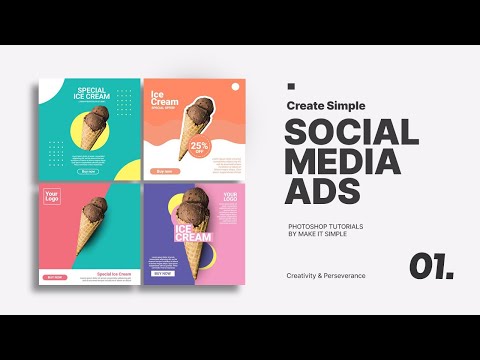
Creative quality directly impacts ad performance. Use high-resolution visuals, authentic messaging, and strong calls-to-action. Test multiple variations of headlines, copy, and imagery to identify what resonates best with each audience segment. A/B testing—also known as split testing—is a core social media ad optimization practice that should be running on every campaign.
Step 4: Set Your Budget and Bidding Strategy
Determine your daily or lifetime budget based on your overall marketing spend and expected return. Most platforms offer automatic bidding, which uses machine learning to optimize for your chosen objective, or manual bidding, which gives you more control over cost-per-click or cost-per-impression thresholds. Start with automatic bidding, monitor performance for at least seven days, and then refine your strategy based on data.
Step 5: Launch, Monitor, and Optimize
Once your campaign is live, track key performance indicators such as click-through rate (CTR), cost per click (CPC), cost per acquisition (CPA), return on ad spend (ROAS), and frequency. Pause underperforming ad sets, scale winning ones, and continuously refresh creative to combat ad fatigue. A well-optimized social media ad campaign should improve in efficiency over time, with CPA trending downward and ROAS trending upward.
Social Media Ad Targeting Best Practices
Targeting is the backbone of effective social media advertising. Here are expert tips to sharpen your approach:
- Layer targeting signals: Combine interests, behaviors, demographics, and custom audiences for maximum relevance.
- Use exclusion audiences: Exclude existing customers or irrelevant segments to reduce wasted ad spend.
- Test broad vs. narrow audiences: Broad audiences can sometimes outperform tightly defined segments because the platform’s algorithm has more data to optimize with.
- Leverage engagement custom audiences: Target people who have liked your Facebook page, watched your videos, or interacted with your Instagram profile.
- Refresh audiences regularly: Audience fatigue leads to diminishing returns—rotate your targeting segments every two to four weeks.
Common Mistakes to Avoid in Social Media Advertising
Even experienced marketers make avoidable mistakes that drain budgets and underperform campaigns. Here are the most common pitfalls:
- Ignoring mobile optimization: Over 80% of social media usage happens on mobile devices. If your ad creative or landing page is not mobile-friendly, you will lose most of your potential audience instantly.
- Neglecting ad frequency caps: Showing the same ad to the same user too often leads to ad fatigue, lower engagement, and increased costs.
- Skipping landing page alignment: The message on your ad must match the experience on your landing page. Misalignment confuses users and tanks conversion rates.
- Relying solely on one platform: Platform algorithms change frequently. Diversifying your social media ad spend across multiple platforms reduces risk and opens new audience opportunities.
- Not tracking conversions properly: Without proper pixel installation and conversion tracking, you cannot measure true ROI or make informed optimization decisions.
FAQs About Social Media Advertising
What is the best social media advertising platform for small businesses with a limited budget?
Facebook and Instagram remain the most cost-effective platforms for small businesses due to their advanced targeting options and relatively low cost-per-click rates. Even with a daily budget of $5 to $10, small businesses can generate meaningful leads and sales by focusing on highly specific audience segments and using compelling visual creatives.
How much should a business spend on social media ad campaigns per month?
Social media ad spend varies widely depending on industry, competition, and campaign goals. A common starting point is $1,000 to $3,000 per month for a small-to-medium business. B2B companies often see strong returns on LinkedIn, while e-commerce brands typically invest more in Instagram, Facebook, and TikTok. The key is to start with a test budget, measure results, and scale what works.
What is the difference between organic social media and paid social media advertising?
Organic social media refers to free content posted on your profiles to build community and engagement, while paid social media advertising involves spending money to place promotional content in front of targeted audiences beyond your existing followers. Both are important, but paid social delivers significantly faster and more measurable results, especially for businesses looking to scale quickly or drive direct conversions.

How long does it take to see results from a social media ad campaign?
Most social media ad platforms need at least 3 to 7 days of data before their algorithms optimize effectively. Early results may be inconsistent as the system learns which audiences respond best. For meaningful analysis, give each campaign a minimum of 14 days and at least 50 conversions before making significant changes to targeting, creative, or budget.
Can social media advertising improve brand awareness even without direct conversions?
Absolutely. Brand awareness campaigns on platforms like TikTok, Instagram, and YouTube are designed to maximize impressions and reach rather than direct clicks. Metrics such as video views, ad recall lift, and brand search volume can indicate whether your social media ad campaign is successfully building top-of-funnel recognition, which often leads to conversions weeks or months later.
What are the most important metrics to track in social media advertising?
The most important metrics depend on your campaign objective, but universally valuable KPIs include click-through rate (CTR), cost per click (CPC), cost per acquisition (CPA), return on ad spend (ROAS), and frequency. For awareness campaigns, impressions and reach take priority. For conversion campaigns, CPA and ROAS are the ultimate benchmarks of success.
Conclusion
Social media advertisement is one of the most powerful and measurable marketing channels available to businesses today. From selecting the right platforms and ad formats to refining your targeting, creative, and bidding strategy, every element of your paid social media effort contributes to your overall success. By following the frameworks and best practices outlined in this guide—defining clear goals, leveraging advanced audience segmentation, continuously testing and optimizing creatives, and avoiding common pitfalls—you can build social media ad campaigns that deliver real, scalable results. The landscape of social media marketing will continue to evolve with new platforms, formats, and technologies, but the fundamentals of strategic planning, audience-centric messaging, and data-driven optimization will remain the foundation of every high-performing campaign. Start small, learn aggressively, and scale what works.