


Social media advertising costs have become one of the most critical considerations for marketers, business owners, and brands looking to scale their digital presence in 2024 and beyond. Whether you are a startup allocating your first advertising budget or a seasoned enterprise refining your paid media strategy, understanding how much it actually costs to run ads on platforms like Meta, Google, TikTok, LinkedIn, and X is essential for maximizing return on investment. The average cost of social media advertising varies dramatically based on your industry, targeting parameters, ad quality, bidding strategy, and the platform you choose. This comprehensive guide breaks down everything you need to know about social media ad spend—from the basic cost-per-click benchmarks to advanced budget optimization techniques that experienced marketers use to squeeze every dollar of value from their campaigns.
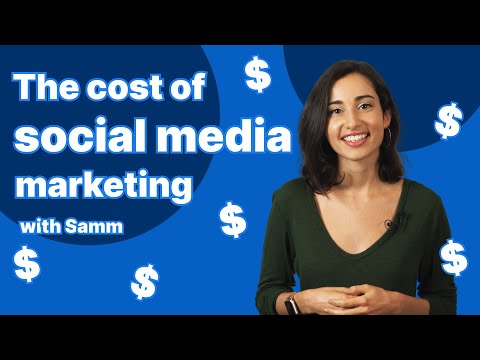
Understanding Social Media Advertising Costs

Before diving into platform-specific numbers, it is important to understand what “advertising costs social media” actually encompasses. The phrase refers to the total expenditure required to publish paid promotional content across social networking platforms, including costs associated with creative development, campaign management, bidding fees, and ongoing optimization. Social media advertising costs are not a single fixed number; they fluctuate based on auction dynamics, audience competition, and seasonal demand. Most platforms operate on a bidding model where advertisers compete for ad placements, meaning your costs are directly influenced by how many other brands are targeting the same audience at the same time.
Key Metrics That Define Social Media Ad Spending
When evaluating how much social media advertising costs, several key performance metrics come into play. Understanding these benchmarks helps you set realistic expectations and measure whether your campaigns are performing efficiently.
- Cost Per Click (CPC): The amount you pay each time a user clicks on your ad. Across most social platforms, the average CPC ranges from $0.50 to $3.50 depending on the industry and targeting specificity.
- Cost Per Mille (CPM): This represents the cost per 1,000 ad impressions. CPM rates are particularly useful when your goal is brand awareness rather than direct conversions.
- Cost Per Acquisition (CPA): The total cost divided by the number of conversions. This is arguably the most important metric for ROI-focused advertisers.
- Cost Per Action (CPA): Similar to CPA but specifically tied to a predefined action such as a sign-up, download, or purchase.
Average Social Media Advertising Costs by Platform
Each social media platform has its own unique advertising ecosystem, audience demographics, and auction mechanics that directly impact how much you will spend. Below is a detailed look at what you can expect from the most popular platforms.

Meta Advertising Costs (Facebook & Instagram)
Meta remains the dominant player in social media advertising, commanding billions in daily ad spend globally. The average cost of advertising on Meta platforms typically falls between $0.70 and $2.50 per click, with CPM rates averaging around $7 to $12. Facebook tends to be slightly more affordable than Instagram, though Instagram often delivers higher engagement rates and better conversion quality for visually driven products and services. Industries such as e-commerce, retail, and consumer goods frequently see the highest competition and therefore the steepest costs on Meta.
TikTok Advertising Costs
TikTok has exploded in popularity as an advertising platform, and its costs reflect that growth. Average TikTok ad costs range from $0.50 to $1.50 per click, with CPM rates that can be surprisingly competitive at around $6 to $10. However, TikTok’s auction model rewards high-quality, engaging creative content, so advertisers who invest in compelling video production often see lower effective costs per result. The platform is particularly effective for reaching Gen Z and younger millennial demographics.
LinkedIn Advertising Costs
If your target audience is professionals and B2B decision-makers, LinkedIn is the platform of choice—and it comes with a premium price tag. LinkedIn advertising costs are significantly higher than other platforms, with CPC averaging between $5.00 and $8.00 and CPM rates often exceeding $30. The justification for these higher social media ad costs lies in the precision of the targeting. LinkedIn allows you to target by job title, company size, industry, seniority level, and even specific skills, making it extraordinarily effective for lead generation campaigns despite the steep price point.
X (formerly Twitter) Advertising Costs
X advertising costs tend to be moderate, with CPC averaging between $0.50 and $1.50. The platform is well-suited for real-time campaigns, event marketing, and brands looking to tap into trending conversations. However, X’s smaller user base and evolving platform dynamics mean that ad costs can spike during high-traffic periods or when political and cultural events drive engagement surges.
Factors That Influence Social Media Ad Pricing
The cost of running ads on social media is not arbitrary. Multiple interconnected factors determine what you actually pay. Understanding these variables gives you the power to optimize your spending and avoid wasting budget on inefficient campaigns.
Industry Competition and Vertical
Highly competitive industries such as insurance, legal services, finance, and healthcare consistently report the highest social media advertising costs. In these verticals, multiple brands are bidding for the same keywords and audience segments, which drives up auction prices. Conversely, niche industries with fewer competitors often enjoy lower CPM and CPC rates, making it easier for smaller businesses to compete effectively.
Audience Targeting and Granularity
Broad targeting strategies generally cost less per result because you are competing for a larger pool of users. Narrow targeting—such as targeting users by specific interests, behaviors, lookalike audiences, or custom segments—increases competition for a smaller audience and raises your advertising costs social media budgets accordingly. The trick is finding the sweet spot where your targeting is specific enough to drive conversions but broad enough to maintain cost efficiency.
Ad Quality and Relevance Score
Every major social media platform evaluates ad quality through relevance scoring systems. Meta calls it “Quality Ranking,” TikTok uses “Creative Quality,” and LinkedIn has its own relevance metrics. Ads with higher relevance scores receive lower costs and better placement. Factors that improve your ad quality include compelling visuals, clear messaging, strong calls to action, and landing pages that align with your ad copy.
Seasonality and Timing
Advertising costs fluctuate throughout the year. Q4, particularly the holiday shopping season, sees dramatic increases in social media ad spend across virtually every platform. The average cost of advertising on social media in November and December can be 20 to 40 percent higher than during quieter months. Planning campaigns strategically around seasonal demand can help you manage costs more effectively.
Bidding Strategy and Campaign Objective
Your choice of bidding strategy directly impacts how much you spend. Manual bidding gives you more control but requires more expertise. Automated bidding, such as Meta’s Lowest Cost or Target Cost options, allows the algorithm to optimize for your goals but can sometimes overspend if not properly constrained with budget caps and cost controls.
How to Budget for Social Media Advertising
Setting a realistic advertising budget requires balancing your marketing goals with your financial constraints. Here are actionable steps to help you plan effectively.
- Define your primary campaign objective. Are you building brand awareness, generating leads, driving website traffic, or increasing sales? Your objective determines which metrics matter most and how you should allocate your budget.
- Research industry benchmarks. Use the CPC, CPM, and CPA data outlined in this article along with third-party tools like WordStream, Hootsuite, or Sprout Social to understand what businesses in your niche typically spend.
- Start with a test budget. Allocate a modest budget—typically $500 to $2,000 per platform—to test different audiences, creatives, and placements before scaling.
- Set a target CPA or ROAS. Work backward from your profit margins to determine how much you can afford to spend per acquisition while remaining profitable.
- Monitor and iterate weekly. Social media advertising is not a set-it-and-forget-it strategy. Regular performance reviews allow you to reallocate budget toward top-performing campaigns and pause underperforming ones.
Social Media Advertising Cost Comparison Table
| Platform | Average CPC | Average CPM | Average CPA | Best For |
| Meta (Facebook & Instagram) | $0.70 – $2.50 | $7 – $12 | $15 – $50 | E-commerce, local businesses, brand awareness |
| TikTok | $0.50 – $1.50 | $6 – $10 | $10 – $35 | Gen Z, viral campaigns, video-first brands |
| $5.00 – $8.00 | $25 – $45 | $75 – $200 | B2B, lead generation, professional services | |
| X (Twitter) | $0.50 – $1.50 | $6 – $12 | $20 – $60 | Real-time marketing, news, event promotion |
| $0.10 – $1.50 | $2 – $5 | $5 – $25 | E-commerce, home decor, fashion, DIY |
Expert Tips to Reduce Social Media Ad Costs
Even the best-planned campaigns can become expensive without proper optimization. Here are proven strategies that experienced marketers use to lower their advertising costs social media campaigns without sacrificing performance.
- Improve audience targeting precision: Use lookalike audiences built from your highest-value customers to find new prospects who are statistically similar to your best converters.
- A/B test relentlessly: Test different ad creatives, headlines, copy variations, and CTAs to identify what resonates most with your target audience.
- Optimize landing pages: A slow or poorly designed landing page wastes ad spend. Ensure your landing pages load quickly, are mobile-optimized, and feature a clear value proposition.
- Leverage retargeting: Retargeting campaigns typically deliver significantly lower CPA rates because you are re-engaging users who have already demonstrated interest in your brand.
- Use engagement campaigns to build social proof: Before launching a conversion campaign, run engagement or video view campaigns to build credibility signals that improve your relevance scores and reduce future costs.
- Schedule ads strategically: Run ads during times when your target audience is most active to maximize engagement and improve your ad quality scores.
Conclusion
Social media advertising costs are shaped by a complex interplay of platform dynamics, audience competition, ad quality, and strategic decisions. There is no one-size-fits-all answer to how much it costs to advertise on social media, but by understanding the benchmarks, leveraging the right targeting strategies, and continuously optimizing your campaigns, you can achieve exceptional results regardless of your budget size. The key is to treat social media advertising not as a fixed expense but as a dynamic investment that rewards ongoing learning, testing, and refinement. Start with a clear strategy, monitor your metrics closely, and scale what works while eliminating what does not.
Frequently Asked Questions
A good daily budget depends on your business goals and industry. For small businesses just starting, $10 to $30 per day per platform is often sufficient to gather meaningful data. As campaigns prove profitable, you can scale budgets accordingly. The key is to start small, test thoroughly, and increase spend on campaigns that deliver positive returns.
Monthly social media advertising costs vary widely. Small to medium businesses typically spend between $1,000 and $10,000 per month across platforms. B2B companies targeting narrow professional audiences on LinkedIn may spend $5,000 to $15,000 per month due to higher CPC rates, while B2C brands on Meta or TikTok can achieve strong results with $2,000 to $5,000 monthly budgets.
High advertising costs on social media for your industry likely stem from intense competition, narrow audience targeting, and high customer lifetime value that makes your audience attractive to multiple advertisers. Industries like insurance, legal, and finance consistently report elevated costs because the conversion value justifies the higher bids. Consider broadening your targeting slightly, improving ad creatives, or exploring less saturated platforms to find more cost-effective opportunities.
Pinterest and TikTok often offer the most cost-effective advertising options, with average CPC rates as low as $0.10 to $0.50 on Pinterest and $0.50 to $1.50 on TikTok. However, the cheapest platform is not always the best fit. The right choice depends on where your target audience spends their time and what your specific campaign objectives are. A low cost per click means nothing if the traffic does not convert.
You can lower social media advertising costs by improving ad relevance scores through better creative, refining audience targeting to reduce wasted impressions, implementing retargeting strategies that convert warm audiences at lower costs, and continuously testing and optimizing ad variants. Additionally, running campaigns during off-peak times when competition is lower can reduce CPM and CPC rates while maintaining strong performance.