


When you hear the phrase “another term for marketing,” you might immediately think of advertising or sales — but the truth is far more layered than that. The world of business communication is packed with overlapping terminology, and understanding the subtle differences between these terms can genuinely transform how you position your brand, write your campaigns, and communicate with stakeholders. Whether you are a small business owner refining your strategy, a marketing professional preparing a presentation, or someone just curious about the landscape of modern commerce, knowing the right synonym for the right context matters more than most people realize. This guide dives deep into every meaningful alternative term for marketing, explains how each one differs, and gives you practical guidance on when to use which word — so you can speak the language of the industry with confidence and precision.
What Exactly Does “Another Term for Marketing” Mean?
Before we explore the synonyms, let us clarify what we mean by the core concept. Marketing is the comprehensive process of identifying, anticipating, and satisfying customer needs profitably. It spans research, strategy, branding, advertising, sales support, and long-term relationship building. So when people ask for another term for marketing, they are usually looking for a word that captures a similar scope, a narrower slice of it, or a modern rebrand of the discipline itself. The right alternative depends entirely on the context — whether you are talking about the full funnel, the awareness phase, or the strategic planning layer.
Common Synonyms for Marketing and Their Nuances
Advertising: The Most Recognized Substitute

Advertising is probably the first word most people reach for when they want another term for marketing. And while it is related, it is not a perfect synonym. Advertising refers specifically to paid, controlled messages delivered through media channels — think television commercials, Google Ads, Facebook sponsored posts, and billboards. Marketing, on the other hand, includes advertising but also encompasses market research, product development, pricing strategy, public relations, and customer retention. If someone says their company does advertising, they are likely describing a tactical execution layer. If they say they do marketing, they are describing the entire strategic ecosystem.
Promotion: The Tactical Side of the Coin
Promotion is another widely used alternative. In the classic marketing mix model — often remembered by the 4Ps (Product, Price, Place, Promotion) — promotion represents one pillar alongside the others. Promotion covers sales incentives, discounts, events, public relations activities, and direct outreach. It tends to be more short-term and action-oriented than the broader discipline of marketing. When a brand runs a limited-time flash sale or launches a referral program, that is promotion in action. It is a subset, not a complete replacement for the full marketing function.
Branding: The Identity-Focused Alternative
Branding deserves special attention because it is both a component of marketing and something people treat as a standalone discipline. Branding focuses on how a company is perceived — its values, visual identity, tone of voice, and emotional resonance. While marketing asks the question “How do we reach and convert our audience?”, branding asks “Who are we, and why should anyone care?” Many professionals use “branding” when they want another term for marketing that emphasizes long-term perception over immediate transactions.
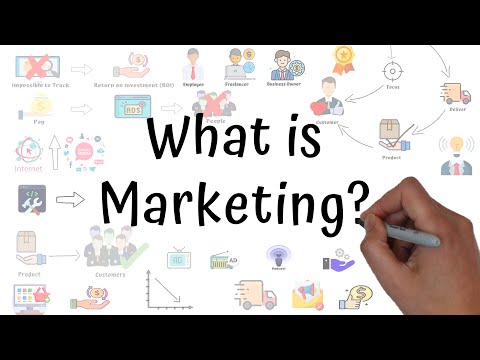
Merchandising and Demand Generation
Two more terms worth understanding are merchandising and demand generation. Merchandising traditionally refers to the presentation and promotion of products at the point of sale — how items are displayed, priced, and packaged to encourage purchase. It is heavily retail-focused and deeply tactical. Demand generation, a term that has exploded in B2B and SaaS circles, refers to the systematic creation of awareness, interest, and desire for a product or service across multiple channels. Both terms overlap with marketing, but each carries a distinct flavor and use case.
Related Marketing Terminology You Should Know
Beyond the direct synonyms, there are several related terms that professionals use interchangeably with marketing in specific contexts. Familiarity with these will sharpen your vocabulary and boost your credibility in any business conversation.
- Market Outreach: The act of actively connecting with potential customers through outreach campaigns, partnerships, and community engagement.
- Go-to-Market Strategy: A comprehensive plan that outlines how a company will deliver its product or service to the end customer, often overlapping heavily with marketing strategy.
- Customer Acquisition: The process of attracting new buyers, which sits at the top of the marketing and sales funnel.
- Growth Marketing: A data-driven approach that experiments across the entire funnel — from awareness to retention — to drive scalable business growth.
- Brand Advocacy: Turning satisfied customers into promoters who generate organic awareness and referrals on your behalf.
- Market Positioning: The strategic act of defining how your brand occupies a distinct space relative to competitors in the minds of your target audience.
Comparison Table: Marketing Synonyms at a Glance
| Term | Scope | Focus | Best Used When |
| Marketing | Broadest — full lifecycle | Strategy, research, execution | Discussing the overall discipline |
| Advertising | Narrow — paid media | Message delivery through channels | Talking about paid campaigns |
| Promotion | Medium — tactical actions | Incentives and short-term pushes | Describing sales drives or events |
| Branding | Medium-to-wide — identity | Perception, values, recognition | Emphasizing long-term reputation |
| Merchandising | Narrow — retail presentation | Product display and pricing | Discussing retail or e-commerce tactics |
| Demand Generation | Wide — funnel-focused | Creating and nurturing interest | B2B or SaaS strategy discussions |
| Go-to-Market | Wide — launch-oriented | Market entry and launch plans | Introducing a new product or market |
When to Use Each Term Strategically
Knowing the synonyms is only half the battle. The real skill lies in choosing the right term for the right moment. Here is a practical framework to guide your decision-making.
- In executive presentations: Use “marketing strategy” or “go-to-market strategy” — these terms signal breadth and sophistication to leadership teams and investors.
- In budget discussions: Lean on “advertising” or “promotion” — these terms are more easily tied to specific spend categories and ROI metrics.
- In brand-building conversations: Default to “branding” — it communicates that you are thinking about perception, differentiation, and long-term equity.
- In performance marketing contexts: Use “demand generation” or “customer acquisition” — these are the language of metrics, dashboards, and funnel optimization.
- In retail or product discussions: “Merchandising” is the precise term that signals operational awareness and commercial instincts.
The key insight here is that no single synonym fully replaces marketing. Each term illuminates a different facet of the discipline, and skilled professionals switch between them fluidly depending on their audience and objective.
Expert Tips for Using Marketing Synonyms Effectively
Even seasoned professionals sometimes misuse these terms in ways that dilute their message. Here are some expert-level recommendations to keep in mind.
- Match the term to the stakeholder. Executives respond to “marketing strategy” and “go-to-market.” Creative teams connect with “branding.” Data teams prefer “demand generation” and “customer acquisition.” Tailor your language to your listener.
- Avoid using them interchangeably in formal documents. If your company’s mission statement says you do “advertising,” you are inadvertently narrowing your scope. Use “marketing” to capture the full picture.
- Combine terms for precision. Phrases like “brand marketing,” “performance marketing,” and “digital marketing” give you the specificity of a synonym while retaining the authoritative umbrella of the core term.
- Stay current with industry evolution. Terms like “growth marketing” and “demand generation” have gained prominence in the last decade. Using them in the right context shows that you are up to date with modern marketing practices.
Frequently Asked Questions
Is advertising the same as another term for marketing?
No, advertising is a subset of marketing. While advertising focuses specifically on paid, controlled messaging through media channels, marketing encompasses the entire process — from market research and product development to pricing, distribution, promotion, and customer retention. Think of advertising as one powerful tool inside the much larger marketing toolkit.
What is another word for marketing in a business plan?
In a business plan, the most commonly used alternatives are “market strategy,” “go-to-market strategy,” or “go-to-market approach.” These terms convey the strategic, planning-oriented dimension of marketing without relying on the word itself, which can feel generic in certain formal documents.
Can I use “promotion” instead of “marketing” on my resume?
You can, but with a caveat. “Promotion” signals a more tactical, short-term focus, while “marketing” implies a broader strategic competency. If your resume highlights campaigns, events, and sales incentives, “promotion” works well. If you want to convey end-to-end strategic ownership, “marketing” remains the stronger choice.
What does demand generation mean compared to marketing?
Demand generation is a specialized branch of marketing that focuses on creating and nurturing buyer interest through multi-channel campaigns. While marketing covers the full spectrum — including branding, research, and retention — demand generation is laser-focused on top-of-funnel awareness and mid-funnel engagement, particularly in B2B and technology sectors.
Are brand marketing and marketing the same thing?
Not exactly. Brand marketing is a focused discipline within marketing that prioritizes building long-term brand awareness, emotional connection, and reputation. Marketing as a whole includes brand marketing but also covers product marketing, performance marketing, digital marketing, and many other specialized areas. Think of brand marketing as one critical pillar supporting the broader marketing structure.
Final Thoughts
The question “what is another term for marketing” opens up a rich landscape of terminology that every business professional should navigate with intention. From advertising and promotion to branding, demand generation, and go-to-market strategy, each synonym carries its own weight, scope, and strategic connotation. The most effective communicators are not the ones who pick one word and stick with it — they are the ones who understand the full spectrum and choose the right term for the right moment. By deepening your vocabulary and applying these terms with precision, you elevate not just your conversations but your entire approach to reaching, engaging, and retaining customers in an increasingly competitive marketplace. Invest in understanding these nuances, and you will find that your marketing language becomes as powerful as the strategies it describes.