


Whether you are a freshman just stepping into a marketing degree program or a business student trying to decode campaign briefs from your first internship, having a solid marketing glossary for students can change everything. The world of modern marketing is packed with specialized terminology—from customer acquisition cost to attribution modeling—and trying to learn it all by osmosis is exhausting. This guide gives you a structured, practical reference that covers essential beginner terms, builds into intermediate concepts, and even touches on advanced vocabulary that separates casual learners from serious future marketers. Bookmark it, return to it often, and watch your confidence in class discussions, group projects, and job interviews grow dramatically.
What Is a Beginner Marketing Glossary for Students?
A beginner marketing glossary is a curated collection of the most common and essential marketing terms, definitions, and concepts organized for easy learning. Think of it as a dictionary built specifically for academic and early-career marketing needs. Unlike generic dictionaries, a glossary like this focuses on terms you will actually encounter in textbooks, lecture slides, marketing campaign briefs, and certification exams such as Google Ads or HubSpot certifications. It covers foundational vocabulary from traditional marketing theory alongside modern digital marketing glossary terms that dominate today’s hiring managers’ expectations.
The best part? You do not need to memorize every single entry on day one. A glossary is a living reference tool. Start with the core concepts, revisit it when you encounter unfamiliar terminology in readings or real-world projects, and gradually build your marketing vocabulary for students over time.
Why Every Marketing Student Needs a Glossary
Some students skip glossary building entirely, assuming they will “pick it up along the way.” That approach works for some, but it leaves gaps that show up during exams, case study presentations, and internship interviews. Here is why a dedicated glossary is worth your time.
Building a Foundation for Marketing Literacy
Marketing has its own language. Terms like brand positioning, marketing funnel, and return on ad spend carry precise meanings that professionals use daily. Without understanding these terms, you risk misinterpreting assignments, missing key points in lectures, and struggling during group projects where teammates throw around jargon casually. A glossary gives you the marketing fundamentals glossary you need to communicate confidently with professors, classmates, and eventually employers.
Why Glossaries Matter for Exam Prep and Projects
- Faster revision: Instead of rereading entire chapters, you can quickly scan definitions and reinforce memory.
- Better exam performance: Many marketing exams include multiple-choice or short-answer questions that test precise definitions.
- Stronger project work: Using correct terminology in case studies and marketing plans signals competence to professors.
- Job interview readiness: Interviewers expect students to define core terms clearly and use them in context.
- Certification preparation: Industry certifications like Google Analytics, Facebook Blueprint, and HubSpot Inbound Marketing heavily test glossary-level knowledge.
Essential Marketing Terms Every Student Should Know
The following core terms form the backbone of any marketing terms dictionary for students. Master these first—they appear in nearly every introductory marketing course and entry-level job description.
Core Marketing Concepts
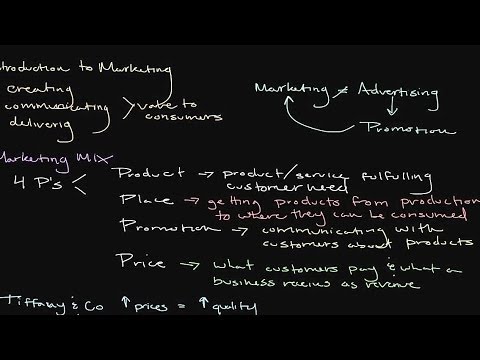
- Marketing Mix (4 Ps): Product, Price, Place, and Promotion—the foundational framework for designing any marketing strategy.
- Target Audience: The specific group of consumers a brand aims to reach with its messaging and offerings.
- Buyer Persona: A semi-fictional representation of your ideal customer, built from market research and real customer data.
- Value Proposition: The unique benefit or set of benefits that makes your product or service the best choice for a specific audience.
- Brand Awareness: The degree to which consumers recognize and recall a brand among its competitors.
- Market Segmentation: The process of dividing a broad market into distinct groups based on demographics, behavior, geography, or psychographics.
- Call to Action (CTA): A prompt designed to trigger an immediate response from the audience, such as “Sign Up Now” or “Shop Today.”
Digital Marketing Vocabulary
Modern marketing cannot function without digital channels. These terms define the landscape of online marketing that students encounter in courses and internships.
- SEO (Search Engine Optimization): The practice of optimizing website content to rank higher in organic search engine results.
- SEM (Search Engine Marketing): Paid strategies like Google Ads that place your content at the top of search results through bidding.
- KPI (Key Performance Indicator): A measurable value that demonstrates how effectively a campaign or strategy achieves its objectives.
- CPA (Cost Per Acquisition): The total cost of acquiring one paying customer through a specific marketing channel.
- CTR (Click-Through Rate): The percentage of people who click on a link after seeing it, calculated as clicks divided by impressions.
- Conversion Rate: The percentage of visitors who complete a desired action, such as making a purchase or filling out a form.
- Bounce Rate: The percentage of visitors who leave a website after viewing only one page without interacting further.
- Email Marketing Funnel: A sequence of emails designed to nurture leads from initial awareness through to purchase.
- Remarketing: Showing targeted ads to users who previously visited your website but did not convert.
| Term | Definition | Common Context |
| SEO | Optimizing content for organic search visibility | Blog posts, website architecture, keyword research |
| SEM | Paid search advertising to drive traffic | Google Ads, Bing Ads campaigns |
| KPI | Measurable goal indicator for campaigns | Revenue targets, engagement benchmarks |
| CPA | Cost of acquiring one customer | Performance marketing, ad budget planning |
| CTR | Clicks divided by impressions | Email campaigns, paid ads, organic listings |
| Bounce Rate | Single-page visits as a percentage | Website analytics, landing page optimization |
Intermediate Marketing Terms to Expand Your Vocabulary
Once you have the core terms locked down, it is time to move into intermediate territory. These concepts appear frequently in upper-level courses, internship projects, and real-world strategy documents.
Customer Journey and Attribution
Customer Journey Mapping is the process of visualizing every touchpoint a customer has with your brand—from first awareness through purchase and advocacy. Attribution Modeling determines which marketing touchpoints deserve credit for a conversion. Understanding the difference between first-touch attribution and last-touch attribution is critical for analyzing campaign performance accurately.
Content and Social Marketing
Content Marketing focuses on creating valuable, relevant content to attract and retain a clearly defined audience. Inbound Marketing, a term coined by HubSpot, describes the strategy of earning customer attention through helpful content rather than interrupting them with ads. Engagement Rate measures how actively your audience interacts with your content—likes, shares, comments, and saves relative to your total reach.
Performance and Analytics
Terms like ROAS (Return on Ad Spend), LTV (Customer Lifetime Value), and churn rate become increasingly important as you progress. ROAS tells you how much revenue you earn for every dollar spent on advertising. LTV estimates the total revenue a customer generates over their entire relationship with your brand. Churn Rate measures the percentage of customers who stop doing business with you during a given period.
Advanced Terms That Set You Apart

For students aiming for competitive internships or graduate roles, knowing advanced vocabulary demonstrates genuine interest and readiness. Terms like marketing attribution, programmatic advertising, lookalike audience modeling, customer data platform (CDP), and marketing mix modeling (MMM) show that you understand the analytical and technical layers of modern marketing. These concepts are increasingly tested in interview settings at agencies, SaaS companies, and e-commerce brands alike.
Practical Tips for Using a Marketing Glossary Effectively

- Build your own personal glossary: Research shows that actively creating definitions—not just reading them—improves long-term retention. Keep a spreadsheet or notebook where you write each term in your own words.
- Use terms in real projects: Apply new vocabulary when writing marketing plans, social media strategies, or class assignments. Contextual usage cements understanding far better than memorization alone.
- Review weekly: Spend 15 to 20 minutes each week reviewing your glossary. Spaced repetition is one of the most effective learning techniques available.
- Connect related terms: Group concepts into categories like content marketing glossary terms, analytics vocabulary, and brand strategy terminology to see how they interconnect.
- Teach someone else: Explaining a marketing term to a friend or study partner forces you to clarify your understanding and identify gaps.
Frequently Asked Questions
What are the top 10 marketing terms every beginner student should learn first?
The top 10 marketing terms every beginner should learn are marketing mix (4 Ps), target audience, buyer persona, value proposition, brand awareness, marketing funnel, call to action, SEO, KPI, and conversion rate. These terms form the foundation of both traditional and digital marketing and appear consistently across introductory courses and entry-level job descriptions.
How can marketing students build a personal glossary effectively?
The most effective approach is to maintain a running document—such as a Google Sheet or Notion page—where you log every new term you encounter during readings, lectures, or work experience. For each term, write the definition in your own words, add a real-world example, and note where you first saw the term used. This active learning method dramatically improves recall compared to passive reading alone.
What is the difference between SEO and SEM for a marketing student?
SEO stands for Search Engine Optimization and focuses on improving organic (unpaid) search rankings through content quality, technical optimization, and backlink building. SEM stands for Search Engine Marketing and encompasses both SEO and paid search advertising. In practice, many professionals use SEM to refer specifically to paid search campaigns, so always check the context in which the term is used.
Why is understanding marketing KPIs important for students looking for internships?
Internship interviewers frequently ask candidates to explain key performance indicators because KPIs demonstrate whether a student can measure and communicate marketing effectiveness. Understanding metrics like ROAS, CTR, CPA, and LTV shows that you can think in terms of data-driven results rather than just creative ideas, which is what hiring managers at agencies and brands prioritize in entry-level candidates.
Which marketing glossary terms are most relevant for students studying digital marketing specifically?
Students focused on digital marketing should prioritize terms like click-through rate, cost per acquisition, attribution modeling, remarketing, engagement rate, lookalike audiences, and programmatic advertising. These terms represent the core vocabulary of digital campaign management and analytics roles that dominate the modern marketing job market.
Final Thoughts
A well-organized beginner marketing glossary for students is more than a list of definitions—it is a strategic learning tool that accelerates your academic performance and professional development. By starting with core terms, progressing to intermediate concepts, and eventually mastering advanced vocabulary, you build a deep and layered understanding of marketing that will serve you in classrooms, internships, and careers. Keep your glossary updated, revisit it regularly, and challenge yourself to use new terms in real projects and conversations. The students who treat their marketing vocabulary as a living, evolving resource are the ones who stand out in the classroom and in the workplace. Start building yours today, and you will thank yourself when exam season arrives and when your first internship interview goes exceptionally well.